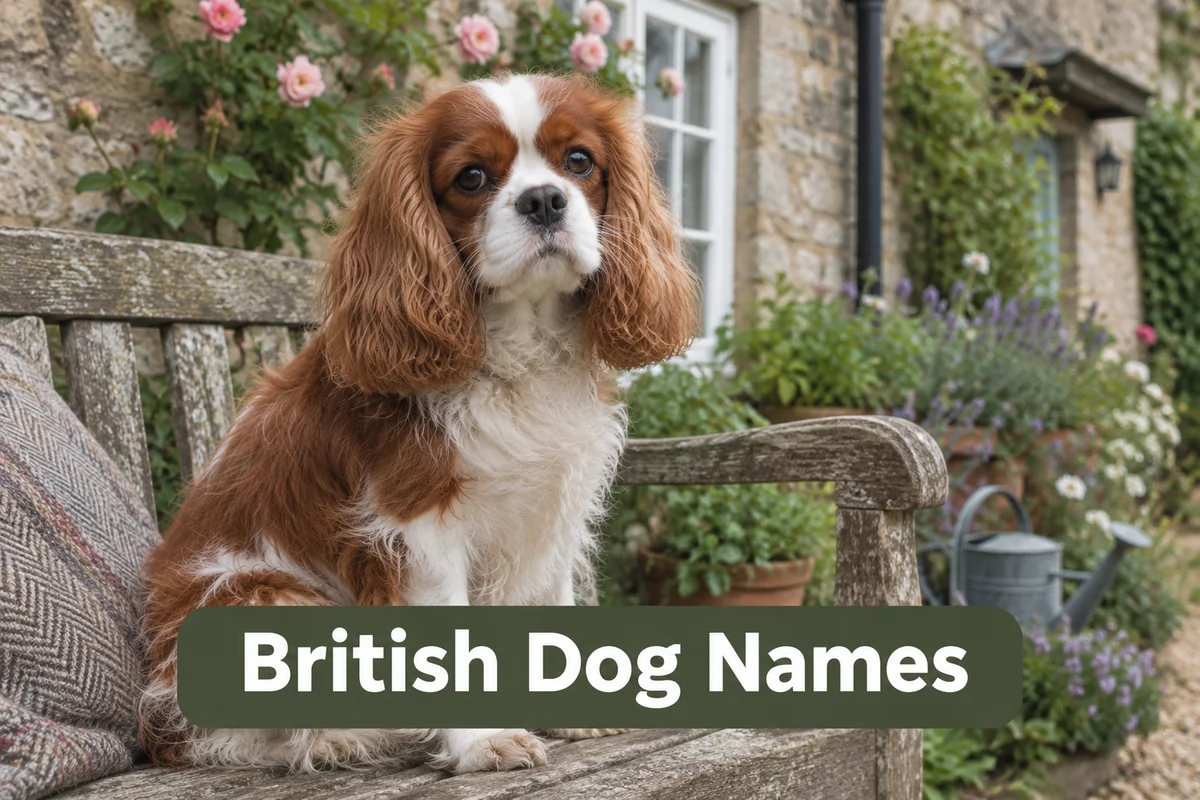
British dog names pull from five real sources: royal titles, British place names, literary characters, native dog breeds, and a healthy dose of teatime food. This list has 330+ of them, split by gender and mood so you’re not wading through 700 bare words with no context for any of them.
What Actually Makes a Name Sound British?
Most British-sounding dog names fall into one of a few lanes: royal (Winston, Elizabeth), geographic (Chester, Bristol), literary (Darcy, Holmes), or a real British dog breed used as a name in itself (Yorkie, Springer). Knowing which lane you’re pulling from helps the name actually feel intentional instead of randomly posh.
A handful of dog breeds genuinely originated in Britain, which is part of why the theme resonates. The Yorkshire Terrier comes from 19th-century Yorkshire, the Staffordshire Bull Terrier traces back to England’s Black Country, and the Border Collie was bred to work the hills along the England-Scotland border.
How to Pick a British Name for Your Dog
Start with the breed. A stocky British bulldog carries a name like Winston better than a lanky greyhound would.
Then think about how often you’ll actually say it out loud. Sir Reginald Fitzwilliam III is funny on paper, but Reggie is what you’ll be yelling across the park by week two.
What Are Good British Dog Names for Male Dogs?
These lean toward solid, easy-to-call names with a clearly British ring to them.
- Winston — carries real weight, thanks to Churchill
- Arthur — legendary king, works on any size dog
- Bertie — old nickname for Albert, warm and friendly
- Reggie — short for Reginald, easy to shout
- Monty — dashing, a bit theatrical
- Alfie — one of the most common names in England right now
- Oscar — sharp, a little literary
- Basil — herbaceous and stubborn-sounding at once
- Rupert — soft consonants, classic
- Percy — proper but playful
- Barnaby — a mouthful that shortens nicely to Barney
- Nigel — quintessentially English, good for a dry-humored dog
- Sherlock — for the dog that sniffs out every crumb
- Toby — short, cheerful, easy to train with
- Clive — plain, understated, very English
- Jasper — earthy, works well on a hunting-type breed
- Digby — country-estate energy
- Wesley — a little formal, ages well
- Colin — famously ordinary, oddly charming on a dog
- Hugo — sharp, modern-British
- Freddie — short for Frederick, universally liked
- Angus — Scottish, strong-sounding
- Rhys — Welsh, sharp and short
- Kingsley — grand without trying too hard
- Wilfred — old-fashioned, currently trending back
- Edwin — soft, gentle sound
- Cyril — properly old English
- Gordon — plain, dependable
- Bramwell — literary-adjacent, uncommon
- Sterling — nods to British currency, sounds sharp
What Are Good British Dog Names for Female Dogs?
These pull from royal names, English flowers, and a few classic nicknames.
- Elizabeth — royal, shortens easily to Liz or Bess
- Charlotte — soft and regal
- Daisy — one of England’s most common dog names
- Poppy — bright, floral, very British
- Willow — graceful, works on any breed
- Millie — short for Millicent, warm and friendly
- Rosie — simple, well-loved
- Beatrice — royal, a little formal
- Matilda — old English, shortens to Tilly
- Eleanor — elegant, historical weight
- Ivy — climbing plant, quietly stylish
- Primrose — cottage-garden charm
- Winnie — short for Winifred, warm sound
- Clemmie — short for Clementine, bright and fast
- Fenella — Scottish-Gaelic root, uncommon
- Bronwen — Welsh, means fair and blessed
- Marigold — sunny, garden-party energy
- Bess — short and punchy, ties back to Elizabeth
- Cressida — literary, Shakespearean
- Isla — Scottish island name, currently trending
- Fern — quiet, woodland feel
- Gwendolyn — Welsh, shortens to Gwen
- Verity — means truth, plain and pretty
- Bramble — hedgerow plant, good for a scrappy terrier
- Meg — short, common, easy to call
- Hyacinth — floral and a little dramatic
- Peggy — cheeky, vintage nickname for Margaret
- Nell — short for Eleanor or Helen, brisk sound
- Wren — small bird, small dog energy
- Freya — Norse-rooted but common across the UK
What Are Funny British Dog Names?
British humor leans dry and self-deprecating, and dog names can carry that same energy without going full costume-party.
- Biscuit — the actual British word for cookie
- Crumpet — round, warm, a little silly
- Gobsmacked — British slang for genuinely shocked
- Waffle — also British slang for talking nonsense
- Muppet — affectionate British insult for someone daft
- Gordon Barksby — a pun on a certain shouty chef, no direct reference needed to land the joke
- Sir Barksalot — mock-knighted, obvious and still funny
- Pudding — for a round, food-motivated dog
- Nutter — British slang for someone a bit wild
- Bumbershoot — old British slang for umbrella
- Codswallop — means nonsense, fun to shout
- Chappie — old-fashioned British slang for a fellow
- Bangers — as in bangers and mash, works on a food-obsessed dog
- Nosh — British slang for food
- Scruffington — for a scruffy terrier mix
- Guv’nor — cheeky term of respect
- Grub — plain old British word for food
- Wonky — for a dog that runs a little crooked
- Chuffed — British for genuinely pleased
- Knackered — for the dog that’s always napping
- Barmy — British for slightly mad
- Bobby — slang for a British police officer, sturdy sound
- Cheeky — for the dog that steals food off counters
- Fusspot — for a picky eater
- Ploughman — as in a ploughman’s lunch, rustic and funny
- Dodgy — British slang for suspicious, ironic on a sweet dog
- Naff — British for uncool, funny as a name
- Plonker — British insult for someone silly, comic on a dog
- Berk — mild British insult, comic on a goofy dog
- Twit — silly British insult, harmless as a pet name
- Muggins — old slang for someone gullible, endearing on a dog
What Are the Most Popular British Dog Names Right Now?
These are the names that show up again and again across UK dog registries and shelters, the ones that have stuck around because they simply work.
- Bella — consistently one of the UK’s top picks
- Luna — moon-themed, currently rising fast
- Max — short, classic, never really fades
- Charlie — works for either gender, endlessly popular
- Rosie — a steady UK favorite for female dogs
- Buddy — friendly, simple, widely used
- Milo — modern-classic, popular across breeds
- Bailey — soft-sounding, common in the UK
- Teddy — round and cuddly-sounding, popular for smaller breeds
- Poppy — a UK top-ten name for years running
- Cooper — increasingly common, easy to call
- Ruby — warm, gem-toned, widely used
- Alfie — a genuine UK top-name mainstay
- Molly — old favorite, still going strong
- Archie — royal-adjacent, hugely popular since the 2010s
- Daisy — simple and reliably common
- Ozzy — short, punchy, on the rise
- Sadie — soft, currently trending
- Bear — for a big, fluffy breed
- Willow — climbing in popularity across the UK
- Jack — plain, dependable, always in rotation
- Ella — short, clean, well-used
- Rocky — sturdy and enduringly popular
- Bonnie — Scottish-flavored, widely loved UK-wide
- Toby — steady, mid-list favorite for over a decade
What Are Good Royal-Inspired British Dog Names?
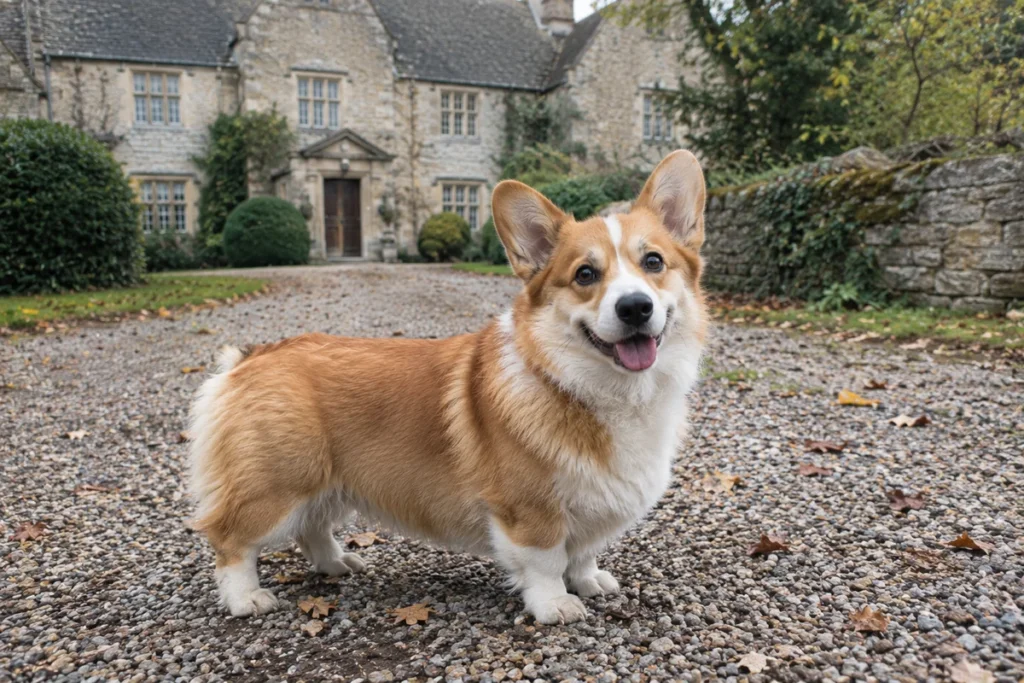
The royal family has supplied dog names for generations, partly because the Queen herself famously kept a long line of corgis.
- Victoria — longest-reigning queen before Elizabeth II
- Albert — Victoria’s consort, dignified and short as Bert
- George — steady, currently a royal-family favorite
- Philip — plain, sturdy royal name
- Anne — brisk, no-nonsense royal name
- Edward — classic, shortens to Ed or Ted
- Camilla — regal, softens to Millie
- Diana — instantly recognizable, timeless
- Harry — friendly, works on almost any dog
- William — dependable, shortens to Will or Wills
- Charlotte — soft royal name, already popular
- Louis — light, French-flavored royal choice
- Sophie — modern royal, easy to say
- Zara — sharp, currently fashionable
- Eugenie — uncommon, a real conversation starter
- Beatrice — formal but friendly as Bea
- Mary — plain, historically loaded, still works
- Richard — shortens to Dick or Rick, old royal weight
- Henry — repeated eight times in English royal history
- James — steady, works on any size dog
- Margaret — shortens to Maggie, old royal charm
- Balmoral — the royal Scottish estate, unusual as a name
- Sandringham — another royal estate, grand and unusual
- Windsor — the royal house name itself
- Regent — not a royal name exactly, but carries the same weight
What British Place Names Work Well for Dogs?
British towns and counties make surprisingly good dog names, since most of them are short, punchy, and easy to shout across a park.
- Chester — walled Roman city, sounds like a dog name already
- Dorset — soft, coastal county sound
- Kendal — Lake District town, crisp and short
- Bristol — port city, strong two syllables
- Derby — sharp, sporting association
- Bath — famously short, a little cheeky as a name
- Exeter — cathedral city, elegant
- Ripon — small Yorkshire city, uncommon
- Rye — tiny Sussex town, one syllable, very callable
- Hexham — Northumberland market town, unusual and strong
- Lyme — coastal town, brisk sound
- Berwick — border town between England and Scotland
- Malvern — Worcestershire hills, soft and pretty
- Wells — England’s smallest city, plain and clean
- Frome — Somerset market town, quirky spelling
- Corfe — Dorset village, short and sharp
- Ludlow — Shropshire market town, distinctive rhythm
- Hereford — cathedral city, also a cattle breed, sturdy sound
- Rydal — Lake District hamlet, gentle sound
- Bourton — Cotswolds village, soft and rural
- Fenwick — old Northumbrian name, sharp
- Alnwick — castle town, dramatic and uncommon
- Marlow — Thames-side town, literary-adjacent too
- Ely — tiny cathedral city, one clean syllable
- Barnstaple — Devon market town, mouthful that shortens to Barnie
If the countryside angle appeals more broadly than just place names, our nature dog names guide widens that out beyond Britain specifically.
What Are Good Literary British Dog Names?
England, Scotland, and Wales have produced an outsized share of the world’s most famous authors and characters, and plenty of those names work well on a dog.
- Darcy — from Pride and Prejudice, proud and elegant
- Holmes — sharp, deductive energy for a curious dog
- Dickens — literary weight, shortens to Dickie
- Austen — clean, literary, works on either gender
- Bronte — sisters who wrote Wuthering Heights and Jane Eyre
- Poirot — for a small, fastidious dog with big opinions
- Watson — loyal sidekick energy
- Heathcliff — brooding, dramatic, great for a moody dog
- Pip — from Great Expectations, small and sharp
- Fagin — Oliver Twist’s scheming pickpocket
- Wickham — Pride and Prejudice’s charming troublemaker
- Copperfield — David Copperfield, a mouthful that shortens to Coppy
- Twist — Oliver Twist, short and punchy
- Rochester — Jane Eyre’s brooding love interest
- Marple — Agatha Christie’s sharp-eyed detective
- Moriarty — for a dog with a scheming streak
- Frodo — Tolkien, adventurous and small-dog friendly
- Bilbo — Tolkien, cozy and homebody energy
- Puck — Shakespeare’s mischief-maker
- Falstaff — Shakespeare, big personality, big dog
- Wooster — P.G. Wodehouse’s bumbling gentleman
- Jeeves — Wooster’s unflappable valet, calm-dog energy
- Milton — poet, dignified and short as Milt
- Kipling — author of The Jungle Book, fitting for an adventurous dog
- Larkin — poet, plain and understated
What Scottish and Welsh Dog Names Work Well?
Scotland and Wales bring their own distinct naming flavor, sharper consonants and older Celtic roots than the softer English names above.
- Hamish — Scottish form of James, warm and rugged
- Angus — means “one strength,” classic Highland name
- Ewan — Scottish, means “born of the yew tree”
- Fraser — Scottish clan name, strong sound
- Lachlan — means “from the land of lakes”
- Duncan — old Scottish royal name
- Callum — means “dove,” softer Scottish choice
- Bonnie — Scottish for pretty, endlessly popular
- Isla — Scottish river and island name
- Skye — Scottish island, airy and light
- Morag — traditional Scottish, uncommon and distinctive
- Fiona — means “fair,” classic Scottish name
- Cairn — a stacked stone trail marker, also a terrier breed
- Thistle — Scotland’s national flower
- Rhys — Welsh, means “ardor” or “enthusiasm”
- Gareth — Welsh, means “gentle”
- Bryn — Welsh for hill, short and strong
- Gwyneth — Welsh, means “blessed” or “white”
- Dylan — Welsh, means “son of the sea”
- Carys — Welsh, means “love”
- Cadi — Welsh, short and bright
- Idris — Welsh mountain name
- Taff — nickname referencing Wales’ River Taff
- Cymru — Welsh word for Wales itself
- Eira — Welsh for snow
For a longer, dedicated list built entirely around Scotland, our scottish dog names page goes deeper than this crossover section.
What Are Good Teatime and Food-Inspired British Dog Names?
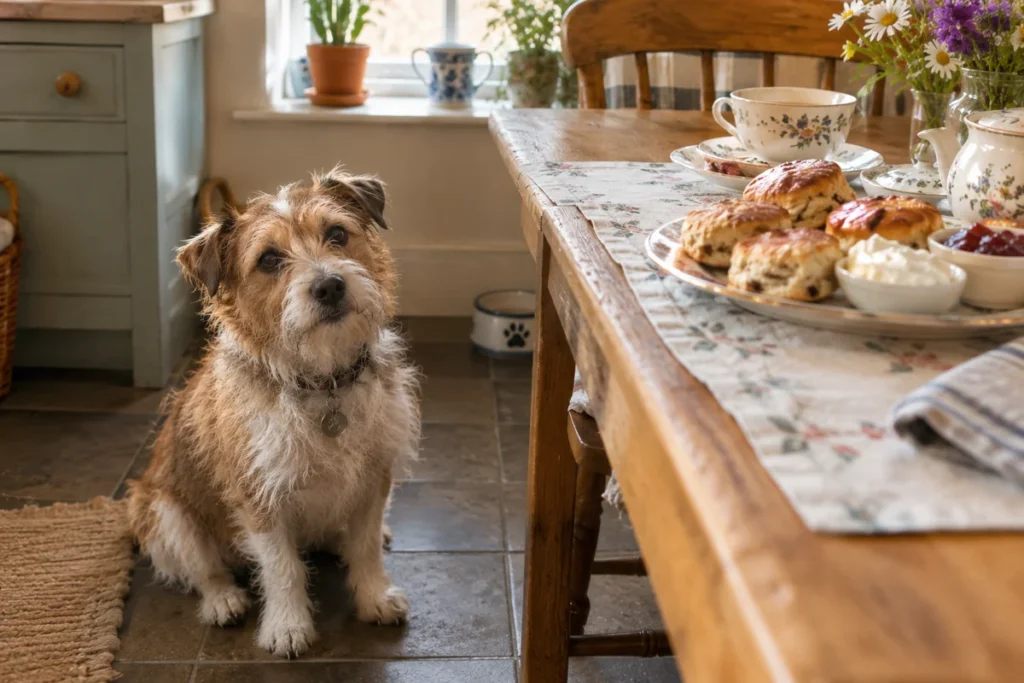
British food culture, biscuits especially, gives you some of the friendliest, easiest names to call across a garden.
- Custard — thick, sweet, and a genuinely common British dessert
- Scone — the classic teatime bake
- Marmite — love-it-or-hate-it British spread
- Digestive — Britain’s most common everyday biscuit
- Hobnob — oaty biscuit, fun to say
- Treacle — dark, sticky, old-fashioned sweetness
- Trifle — layered British dessert
- Bakewell — as in Bakewell tart, almond and jam
- Marmalade — bitter-orange preserve, a very British breakfast staple
- Toffee — sticky, sweet, universally loved as a dog name
- Crumble — warm fruit dessert
- Jaffa — as in Jaffa Cake, orange and chocolate
- Battenberg — the checkerboard pink-and-yellow cake
- Shortbread — buttery Scottish biscuit
- Parkin — a treacly Yorkshire gingerbread
- Clotted — as in clotted cream, classic Devon cream tea
- Rarebit — as in Welsh rarebit, cheese on toast
- Sherbet — fizzy British sweet
- Sausage — as in bangers, blunt and funny
- Mash — pairs naturally with Sausage for a bonded pair
- Kipper — smoked herring, classic British breakfast
- Cobbler — old British word for a shoemaker, also a dessert
- Pimm’s — British summer cocktail
- Yorkshire — as in Yorkshire pudding, doubles as a place reference
- Tipsy — as in tipsy cake, a boozy trifle variant
What Historical British Figures Make Good Dog Names?
British history has produced names with real weight behind them, ones that carry a story even before your dog does anything.
- Churchill — wartime prime minister, commanding and iconic
- Nelson — naval hero, strong one-word name
- Wellington — the Duke who beat Napoleon at Waterloo
- Newton — physicist, sharp and scholarly
- Darwin — naturalist, fitting for a curious dog
- Boudica — warrior queen who led a revolt against Rome
- Cromwell — Lord Protector, blunt and historic
- Tudor — the royal dynasty itself, grand and short
- Boleyn — Anne Boleyn, dramatic Tudor history
- Brunel — pioneering Victorian engineer
- Pankhurst — suffragette leader, strong for a female dog
- Raleigh — explorer, adventurous energy
- Drake — Sir Francis Drake, seafaring history
- Hastings — the 1066 battle, blunt and memorable
- Alfred — the only English king called “the Great”
What British Dog Breed Names Work as Actual Dog Names?
Several dog breeds actually originated in Britain, and using the breed word itself as a name is a genuinely common, low-effort route.
- Yorkie — nods to the Yorkshire Terrier’s home county
- Springer — after the English Springer Spaniel
- Staffie — short for the Staffordshire Bull Terrier
- Collie — the Border Collie’s working-dog name
- Cavalier — after the Cavalier King Charles Spaniel, itself named for King Charles II
- Corgi — the Welsh breed the late Queen famously kept
- Beagle — an old English hunting breed name
- Foxhound — traditional English hunting dog
- Setter — as in English Setter, elegant working name
- Pointer — as in English Pointer, sharp and alert
- Whippet — small, fast English sighthound
- Terrier — generic but genuinely British in origin
- Bulldog — historically tied to England
- Sheepdog — as in Old English Sheepdog, shaggy and sweet
- Deerhound — Scottish breed, tall and noble
- Westie — short for West Highland White Terrier
- Scottie — short for Scottish Terrier
- Cairn — the terrier breed named for Scottish stone markers
- Otterhound — rare English hunting breed
- Harrier — old English scent hound
What Are Aristocratic and Formal British Dog Names?
For a dog with real presence, a title-based name adds a bit of theater without going full costume.
- Duke — high-ranking noble title, works well solo
- Earl — mid-tier noble rank, short and sharp
- Baron — commanding, easy to shout
- Countess — for a dog with genuine attitude
- Lord — blunt, works well as a nickname prefix
- Duchess — elegant, softens with use
- Squire — old English landowner title
- Marquess — grander and rarer than Earl
- Viscount — obscure enough to stand out
- Knight — evokes armor and honor
- Baroness — feminine counterpart to Baron
- Chancellor — formal government title, oddly fitting
- Captain — naval or military rank, punchy and short
- Commander — for a dog that clearly runs the house
- Major — military rank, blunt and easy to call
- Colonel — commanding, classic on an older dog
- Constable — British word for a police officer
- Governor — old-school authority figure
- Marshal — sharp military rank
- Sergeant — blunt, good for a disciplined dog
If your dog carries herself with that same dignified, been-there-done-that energy, our old man dog names list leans into that further. And if the rank-and-title angle is really what you’re after, our military dog names guide has a lot more of it.
What Are Some Unique British Dog Names?
If you want something that won’t get called across three other gardens at the same dog park, these are less common picks.
- Ambrose — old English, means immortal
- Cosmo — Greek-rooted but genuinely used across Britain
- Ottoline — rare, aristocratic-sounding first name
- Rufus — Latin-rooted, means red-haired
- Barnaby — full form of Barney, distinctive on its own
- Marigold — floral, uncommon as a full first name
- Clementine — bright, citrus-toned, rarely used in full
- Wilhelmina — formal, shortens dramatically to Billie
- Peregrine — means wanderer, also a falcon species
- Cressida — Shakespearean, genuinely rare
- Silas — old-fashioned, quietly distinctive
- Delphine — French-flavored but common in the UK too
- Ottillie — old-fashioned, almost never repeated at the park
- Barnabas — the full form behind Barnaby
- Rosalind — Shakespearean, elegant and uncommon
- Fenwick — surname-turned-first-name, sharp sound
- Thomasina — feminine form of Thomas, rare and warm
- Cosima — Italian-flavored but used across Britain
- Bartholomew — grand, shortens to Bart
- Persephone — Greek myth, occasionally used in the UK
- Aurelia — Latin-rooted, elegant and rare
- Caspian — from the Narnia books, British-authored
- Isadora — rare, dramatic first name
- Leopold — royal-adjacent, uncommon on its own
- Verity — plain word meaning truth, distinctive as a name
Common Mistakes to Avoid When Naming a British Dog
Don’t pick a name just because it looked good on a list without saying it out loud first. “Bartholomew” reads beautifully but turns into a mouthful the tenth time you’re calling him in from the rain.
Skip royal titles if you’re going to feel silly using them daily. Shouting “Duchess, come!” across a crowded dog park isn’t for everyone, and there’s no shame in swapping it for something plainer.
Watch out for names that double as real British slang with a rude second meaning. A quick search before you commit saves an awkward introduction later.
Bringing It All Home
Whichever lane you pick, royal, literary, place-based, or straight-up food, say the shortlist out loud in the room with your actual dog before deciding. Names read differently on paper than they do echoing off a hallway at 6 a.m.
For a broader spread of options beyond the British angle specifically, our full dog names hub covers a lot more ground. And if you’re still working with a very young pup, our puppy names guide has ideas suited to that early, wobbly stage before a personality fully shows up.
Frequently Asked Questions About British Dog Names
Royal names like Winston or Charlotte, place names like Chester or Bristol, and food names like Biscuit or Toffee all read as distinctly British without trying too hard. The strongest picks usually pull from just one of those categories rather than mixing several at once.
British humor tends to be dry rather than loud, so names built from actual British slang work well. Biscuit, Muppet, Chuffed, and Codswallop all carry genuine British flavor and still get a laugh.
Bella, Luna, Max, Charlie, and Alfie have all held steady near the top of UK dog-naming lists for several years running. Archie has climbed fast since the mid-2010s, largely tracking the same royal-name popularity that boosted names like Charlotte and George.
Elizabeth, Charlotte, Daisy, Poppy, and Millie are all strong, well-used choices that read clearly British and shorten easily into everyday nicknames.
Winston, Arthur, Alfie, Oscar, and Reggie are dependable picks that work on nearly any breed and hold up well over years of daily use.