
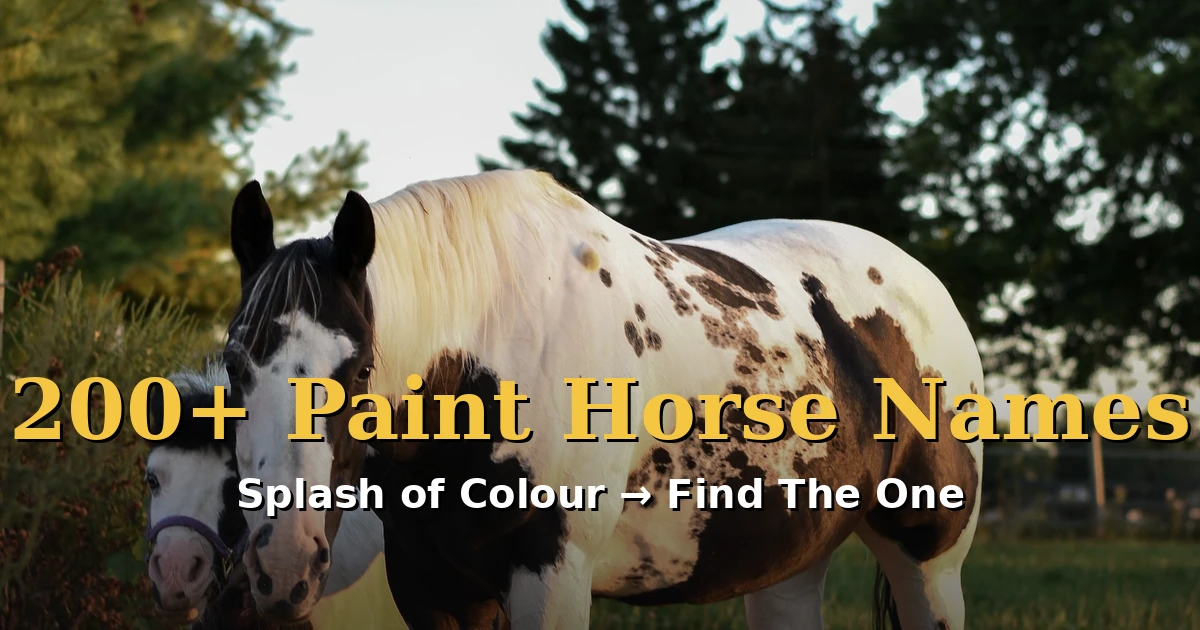
A paint horse walks into a paddock and every head turns. No other horse looks quite like one — white splashed over sorrel, black broken into puzzle pieces, a face that’s half mask and half blaze.
Good paint horse names start with the coat, not the dictionary. A tobiano wears smooth, round patches with white crossing its back. An overo wears ragged splashes that stay off the back, usually with a bold white face. A tovero mixes both and often has blue eyes. Name the pattern first, and the right name usually finds itself.
The 60-Second Paint Horse Primer
Before the lists, the facts behind the names. The American Paint Horse is a real breed, not just a colour — the American Paint Horse Association (APHA) was founded in Fort Worth, Texas, in 1962. Registration needs stock-horse bloodlines (Paint, Quarter Horse, or Thoroughbred) plus the right pattern.
The APHA recognizes three patterns: tobiano (smooth-edged patches, white usually crossing the back, often four white legs), overo (irregular, splashy white that generally stays off the back, often a bald face), and tovero (a mix of both, often with blue eyes). Paint-bred horses born without the pattern can still be registered as Solid Paint-Bred.
And the key distinction: pinto is a coat pattern found in many breeds, while Paint is the breed with the bloodline rules. Paints are also famous for calm, willing temperaments — the same easy nature that makes them one of the best ranch horse breeds around.
Names That Match the Tobiano Pattern
Tobiano is the neat one — smooth, rounded patches, white crossing the back, usually four white legs and a solid-colored head. Think maps, quilts, and puzzles.
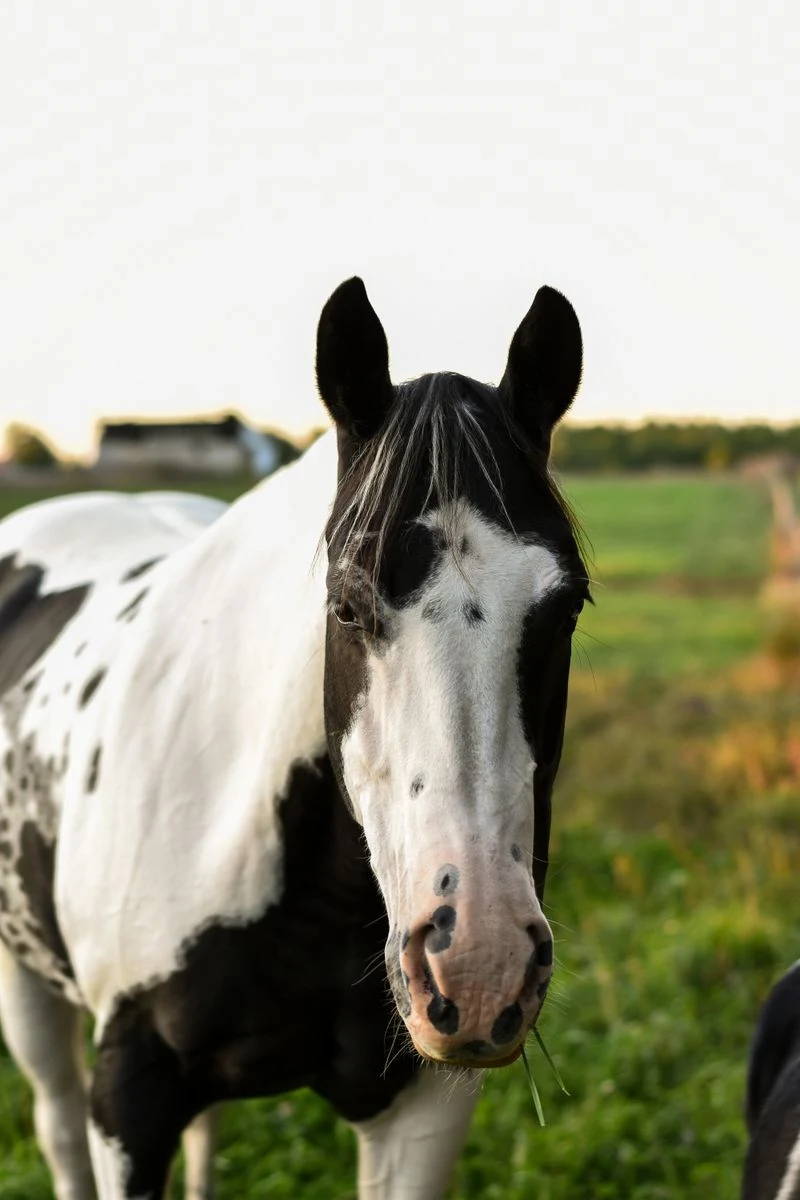
- Atlas – dark patches like continents on a map.
- Patchwork – big rounded patches stitched across the body.
- Quilt – the same picture, softer and homier.
- Jigsaw – pieces that lock together neatly.
- Mosaic – many separate shapes making one picture.
- Pangaea – the ancient supercontinent — for one huge patch.
- Archipelago – dark islands on a white sea.
- Continent – a broad patch across the barrel.
- Peninsula – a patch jutting from a larger one.
- Globe – the round map.
- Cartographer – when you keep seeing borders.
- Meridian – the line where dark meets white.
- Lagoon – a dark patch ringed by white.
- Ink Pool – a dark patch, spilled and settled.
- Cloud – a white patch floating on dark.
- Cumulus – a puffy fair-weather cloud.
- Oreo – the black-and-white cookie.
- Panda – a black-and-white bear.
- Magpie – a black-and-white bird.
- Holstein – a black-and-white dairy cow.
- Cookie – dark chunks in dough.
- Marshmallow – sweet, soft, white.
- Rorschach – the inkblot test, for a mirrored coat.
- Symmetry – an almost-mirrored coat.
- Mirror – patches echoing both sides.
- Tobi – short for tobiano.
- Polka – round polka-dot marks.
- Bingo – the dotted game card.
Names for the Bold Overo Look
Overo is the wild one — ragged-edged white that stays off the back, a bold bald face, dark legs. Masks, splashes, and bright faces live here.
- Splash – white splashed up from below.
- Bandit – dark around the eyes, like a mask.
- Zorro – the masked hero.
- Harlequin – the diamond-costumed jester.
- Blaze – the wide white facial marking.
- Comet – a white streak on the face.
- Lantern – a blaze on a dark head.
- Moonface – a round pale face on a dark body.
- Phantom – a white face out of dark.
- Jag – jagged — after ragged-edged patches.
- Torn – edges torn, never cut.
- Ruff – ragged edges.
- Edge – the white-dark boundary.
- Brushstroke – wide white swipes on the coat.
- Whitewash – white swept over dark.
- Splat – the playful name for a splashy coat.
- Wader – white legs, as if waded through paint.
- Dipped – legs dipped white.
- Socks – high white markings.
- Inkblot – blotted ink, scattered.
- Smudge – a smudged edge.
- Wraith – a pale apparition.
- Overy – short for overo.
- Sabino – the high-white pattern, as a name.
Tovero Paint Horse Names for Blue-Eyed Beauties
Tovero blends tobiano and overo, and it often brings blue eyes with it. Sky, water, and gemstone names were made for this look — our mythical horse names list goes deeper on the mystical side.
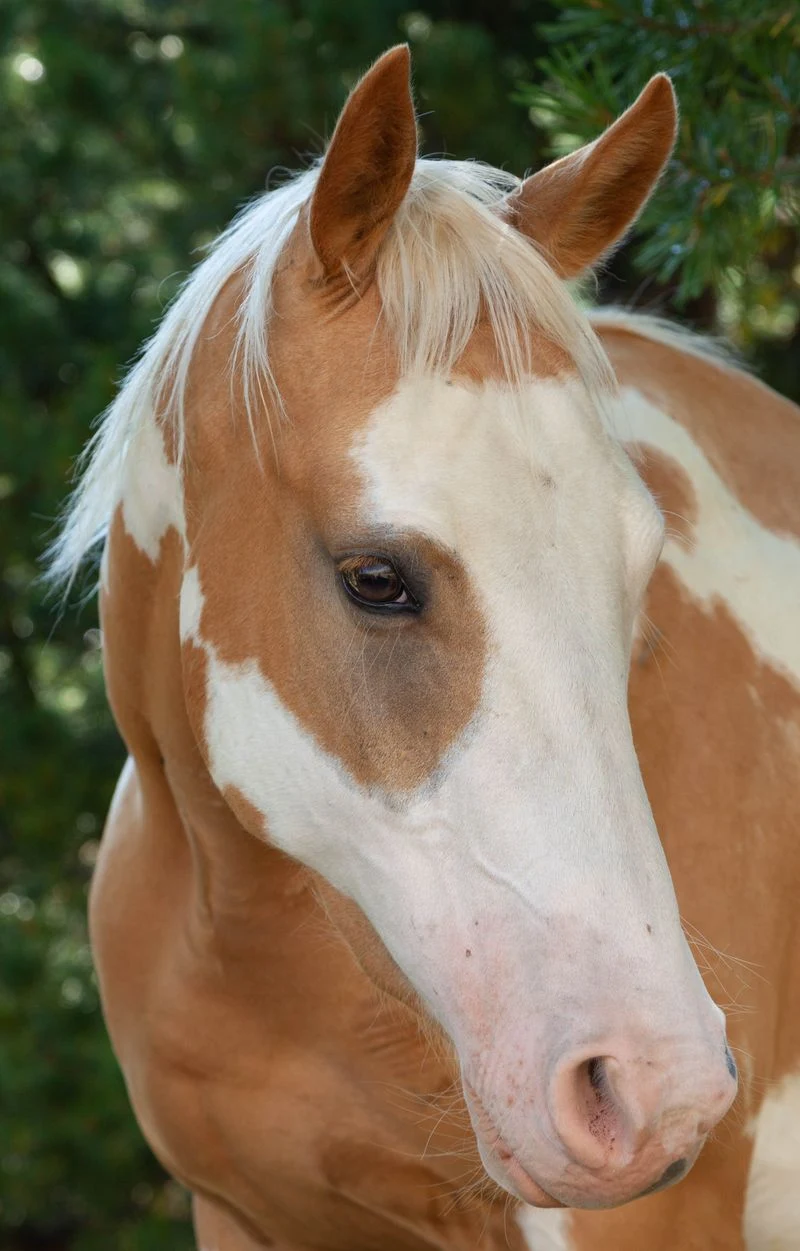
- Sapphire – the blue gem — for blue eyes.
- Azure – deep blue, as a word.
- Cobalt – the vivid blue.
- Skye – the blue sky, one syllable.
- Ocean – deep blue water.
- Glacier – old blue ice.
- Ice – pale and cool.
- Frost – cold morning sparkle.
- Misty – a grey-blue haze.
- Storm – a grey-blue drama.
- Slate – blue-grey stone.
- Steel – grey-blue, strong.
- Denim – blue work fabric.
- Silver – pale metal.
- Moonstone – a gem with a blue-white sheen.
- Opal – a gem flashing blue and white.
- Pearl – the pale gem.
- Blue – plain, honest, perfect for blue eyes.
- Aura – the glow of a two-tone coat.
- Tovey – short for tovero.
- Dual – two sides of one horse.
- Gemini – the twins — for a balanced coat.
- Yin Yang – balanced opposites.
- Two-Tone – the literal description, worn with pride.
Paint Horse Names by Base Colour
Under every pattern sits a base colour — sorrel, black, bay, palomino, buckskin, dun, or grey. Name the colour and the white becomes the accent. (Many paints read as black and white overall — our black and white horse names guide has 300+ more, and grey-based paints pair well with grey horse names.)
Sorrel & chestnut + white:
- Ember – glowing red coal.
- Rusty – red-brown rust.
- Copper – red metal.
- Sienna – a reddish-brown earth pigment.
- Autumn – the red-gold season.
- Cinnamon – a warm red-brown spice.
- Paprika – red spice, spicier than cinnamon.
- Flame – a tongue of red-orange fire.
- Sorrel – the coat-colour word itself.
Black + white:
- Onyx – black gemstone.
- Umbra – Latin for shadow; the darkest part of one.
- Licorice – black candy.
- Raven – a black bird.
- Midnight – the darkest hour.
- Tuxedo – the black-and-white suit, for neat markings.
- Zebra – the black-and-white striped animal.
Bay & brown + white:
- Mahogany – a deep red-brown wood.
- Hickory – a brown hardwood.
- Mocha – chocolatey coffee.
- Espresso – dark coffee.
- Chestnut – the coat-colour word itself.
Palomino, buckskin & dun + white:
- Buttercup – a yellow wildflower.
- Honey – golden, sweet.
- Butterscotch – a golden candy.
- Nugget – a golden lump.
- Champagne – a pale golden sparkle.
- Dun – the coat-colour word itself.
- Sahara – the great desert — for sandy coats.
- Sandstone – tan rock.
Grey & roan + white:
- Sterling – a silver-grey alloy.
- Ash – grey wood ash.
- Pebble – a small grey stone.
- Smoke – grey drifting haze.
- Granite – hard speckled stone.
- Heron – a grey wading bird.
Names From Paint Horse History
The paint story starts in Spain — spotted horses are recorded there as far back as 700 AD. They crossed the Atlantic, and Plains tribes prized and deliberately bred pinto-coloured horses. When Quarter Horses moved west in the 1800s, stock-horse muscle joined the colour; the Quarter Horse registry excluded the spots in 1940, so paint lovers founded the APHA in 1962. These names carry that journey.
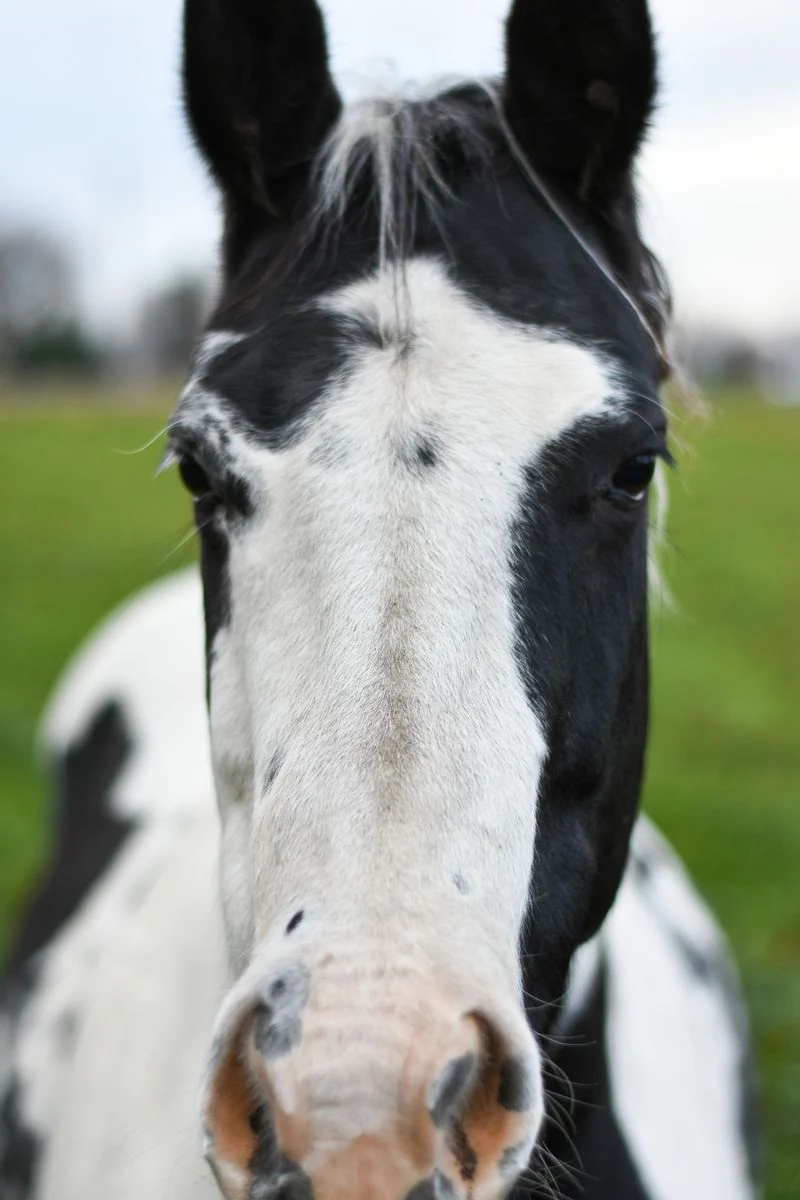
- Pinto – “painted” in Spanish — where the story starts.
- Comanche – the Plains tribe of horsemen.
- Apache – a Southwestern tribe.
- Cochise – the Apache chief; the famous TV paint.
- Kachina – Pueblo spirit figures.
- Mesa – a flat-topped desert hill.
- Canyon – a carved desert valley.
- Rio – “river” in Spanish.
- Sundance – sunrise over the plains.
- Frontier – the western edge.
- Mustang – a free-roaming horse.
- Vaquero – a Spanish-Mexican cowboy.
- Buckaroo – America’s take on vaquero.
- Laredo – a Texas border town.
- Santa Fe – an old trail town.
- Durango – a Colorado railroad town.
- Tombstone – an Arizona frontier town.
- El Paso – a Texas pass city.
- Presidio – a Spanish frontier fort.
- Fort Worth – where the APHA began in 1962.
For more of this world, our western horse names list has 400+ frontier-flavoured ideas.
Famous Paint Horses From Film & TV
Real horses, real fame. Borrowing a famous paint’s name gives yours a story on day one — more screen legends live in our famous horse names collection.
- Scout – Tonto’s paint, The Lone Ranger, radio to film.
- Cochise – Little Joe’s paint in Bonanza (1959–1973).
- Tomahawk – the real horse who played Cochise.
- Fritz – William S. Hart’s pinto in the 1910s.
- Paint – called simply “Paint” before earning the name Scout.
- White Feller – Tonto’s first horse, in the early radio days.
Best Names for Paint Mares
Feminine without being fragile — flowers, light, and a little Spanish fire.
- Clementine – the frontier song; sweet and bright.
- Magnolia – a big Southern bloom.
- Juniper – a fragrant evergreen.
- Wren – a small, quick songbird.
- Lark – a morning songbird.
- Zinnia – a bold garden flower.
- Delilah – soft and storybook.
- Rosalie – a rose-like name.
- Esmeralda – “emerald” in Spanish.
- Bonita – “pretty” in Spanish.
- Mariposa – “butterfly” in Spanish.
- Luz – “light” in Spanish.
- Meadow – open grassland.
- Savannah – wide grassland.
- Coral – a pink sea gem.
- Blossom – spring flowers.
- Petal – a soft flower part.
- Honeysuckle – a sweet wild vine.
- Sweet Pea – a delicate flower.
- Tulip – the bulb flower.
- Violet – a purple flower.
- Iris – a flower; also a rainbow goddess.
- Aurora – the dawn goddess.
- Seraphina – the “burning ones”; bright and warm.
- Isabella – a timeless classic.
Best Names for Paint Geldings
Short, sturdy, and frontier-flavoured — the kind you can shout across a field.
- Tex – Texas, in one syllable.
- Cody – after Buffalo Bill Cody.
- Jesse – after Jesse James.
- Billy – after Billy the Kid.
- Butch – after Butch Cassidy.
- Kid – the young outlaw’s word.
- Doc – after Doc Holliday.
- Colter – frontiersman John Colter.
- Boone – after Daniel Boone.
- Crockett – after Davy Crockett.
- Carson – after Kit Carson.
- Remington – a rifle maker.
- Colt – Colt’s revolver.
- Winchester – a frontier rifle.
- Stetson – a cowboy hat.
- Chaps – leather leg wear.
- Spur – a rider’s tool.
- Lariat – the rope.
- Riata – a braided rawhide rope.
- Bronco – an untamed horse.
- Cayuse – the old word for a native horse.
- Hoss – cowboy slang for a big horse.
- Buck – a male deer; also, to buck.
- Roan – a mixed-colour coat word.
Fun Two-Tone Name Pairings
Two colours, two names — for a pair of paints, or one horse with a big personality and a barn name to match.
- Salt & Pepper – classic shakers.
- Yin & Yang – balanced opposites.
- Ink & Ivory – a drawing duo.
- Oreo & Milk – a cookie ritual.
- Domino & Dice – a game-night pair.
- Ebony & Ivory – piano keys.
- Night & Day – the oldest contrast.
- Thunder & Lightning – a storm pair.
- Coffee & Cream – a morning cup.
- Tux & Tails – a formal pair.
- Checkers & Chess – a board-game pair.
- Panda & Penguin – black-and-white animals.
Three Rules Before You Pick
1. Shout it across the yard. Two syllables with a hard consonant carry best — Tex, Doc, Boone. Anything longer gets clipped by the wind.
2. Match the horse you have. A chunky gelding named Wraith is funny for a week and wrong forever. Watch the horse a few days first.
3. Split the show name from the barn name. Register something grand like Meridian Moon, call Moon at home.
Paint Horse Names FAQs
What is a paint horse?
A member of the American Paint Horse breed — a stock-type horse with Paint, Quarter Horse, or Thoroughbred bloodlines, registered with the American Paint Horse Association (APHA). The name comes from the bold white-and-colour coat patterns; solid-coloured horses with Paint parents can also be registered as Solid Paint-Bred.
What is the difference between a paint and a pinto?
Paint is a breed with strict bloodline rules; pinto is simply a coat-colour pattern that can appear in many breeds. All Paint Horses are pinto-patterned, but not every pinto horse is a Paint Horse.
What are the three paint horse coat patterns?
The APHA recognizes tobiano (smooth, rounded patches with white usually crossing the back), overo (irregular, splashy white that generally stays off the back, often with a bold white face), and tovero (a mix of both, often with blue eyes).
What is the difference between tobiano and overo?
In tobiano, white usually crosses the back, the legs are often white below the knees and hocks, and the head is mostly solid-coloured. In overo, white generally stays off the back, the markings are irregular and scattered, the face is often boldly marked, and at least one leg is usually dark.
Are paint horses good for beginners?
Yes. Paints share the calm, willing, trainable temperament of the Quarter Horse, which makes them one of the most beginner-friendly breeds — athletic enough for competition but easy-going enough for a first horse.
How much does a paint horse cost?
A usable, well-trained Paint typically starts in the low four figures; well-bred, show-quality, or unusually marked horses run into five figures and beyond. Flashy colour adds value, but conformation, training, and temperament should lead the decision.
Can a solid-coloured horse be registered as a paint?
Yes. The APHA registers horses born to registered Paint parents that don’t show the patterning in its Solid Paint-Bred division, acknowledging their heritage and letting them compete in certain breed activities.
That’s 211 paint horse names — from Atlas to Two-Tone, each with the meaning or reason that makes it work. The best paint horse names always start with the coat: find your horse’s pattern, pick the matching section, and shout your top three across the yard. The one that still sounds right after a bad morning is the keeper.

I’m Liam, and I write every single guide on Pet Names Lovers myself — no giant grids of names with zero reasons. I research each theme properly (breed history, real word meanings, what works when you shout it across a field) so you can find a name that truly fits. More about how this site works: meet Liam here.