
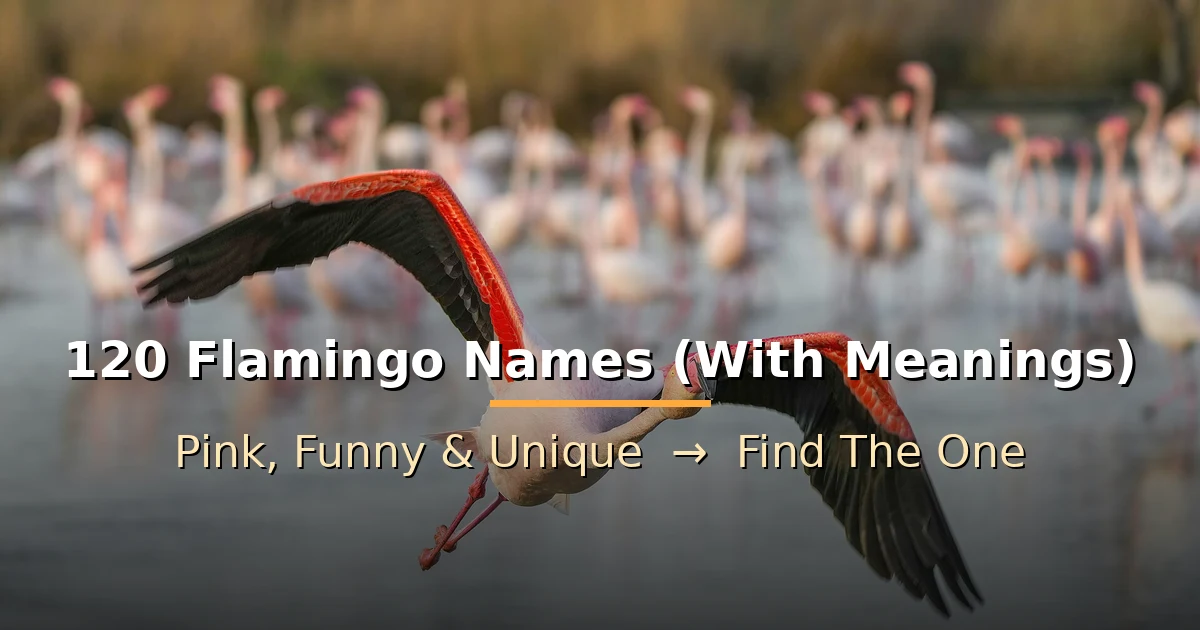
Flamingos are not born pink — they earn their colour from what they eat. Every name here comes from the real bird: the food that dyes its feathers, the six species and their lakes, the upside-down bill, the one-legged stand, and the grey chick it starts life as. Here are 120 flamingo names, each with a reason behind it.
Before the names, here is the one fact that changes how you pick one: a flamingo’s pink is a meal, not a birthright. Chicks hatch grey or white, and their feathers only turn pink as pigments from algae, diatoms, and tiny brine shrimp build up in the growing feathers. A flamingo that stops eating those pigments fades back toward white, and a parent feeding a chick can fade too, because it pours its own stored colour into the bright red crop milk it makes for the baby. So the pinkest flamingo is usually the healthiest and best-fed one, which is why colour names are not decoration — they are the bird’s life story.
Why Flamingos Turn Pink: The Science in Plain Words
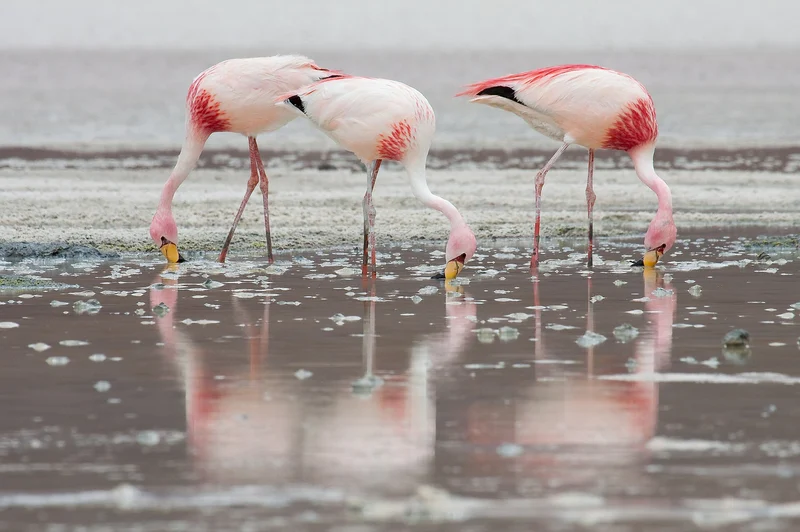
A flamingo’s colour comes from carotenoids, the same family of pigments that makes carrots orange and salmon pink. Flamingos cannot make these pigments themselves, so they have to eat them. They filter-feed in shallow, salty water, sweeping their bent bills side to side and straining out algae, diatoms, small crustaceans, and brine shrimp, all rich in carotenoids such as beta-carotene and astaxanthin. Enzymes in the liver break those pigments down and lay them into new feathers as they grow, which is why a flamingo’s pink deepens with age and a good diet.
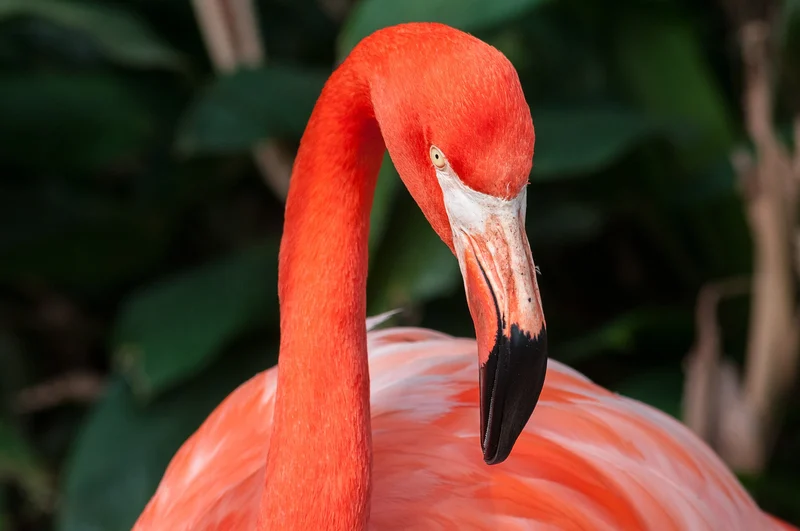
The colour is honest in a way most animal colours are not. A flamingo that is sick, stressed, or short of food turns paler, and a healthy adult in breeding season is at its brightest. Zoos know this and add carotenoid-rich food to the diet, because without it a captive flamingo would slowly wash out to white. The bill and legs carry the colour too: most species have pink legs with black flight feathers, and the bill is pink or pale at the base with a black tip.
Flamingos fly, and they fly well, with long necks stretched forward and long legs trailing behind. Once a year they moult all their flight feathers at the same time and cannot fly for a few weeks. They live a long time, twenty to thirty years in the wild and far longer in zoos — one greater flamingo in Adelaide lived to 83. And they are social to the core: a flock, properly called a flamboyance, can number in the tens of thousands, feeding, nesting, and raising chicks together on the mud.
The Six Flamingo Species and the Places They Come From
There are only six flamingo species in the world, and each one lives in a different corner of it. Knowing which one you are naming makes the name mean something, because a greater flamingo from the Camargue and a lesser flamingo from Lake Natron are very different birds.
| Species | Scientific name | Where it lives | Colour note |
|---|---|---|---|
| Greater flamingo | Phoenicopterus roseus | Salt lagoons of southern Europe, Africa, and south Asia | Pale pink, and the tallest of the six |
| American flamingo | Phoenicopterus ruber | The Caribbean, Yucatán, the Galápagos, and Florida | The pinkest of the six species |
| Chilean flamingo | Phoenicopterus chilensis | Shallow lakes of southern South America | Paler pink, with a black-tipped bill |
| Andean flamingo | Phoenicoparrus andinus | High salt lakes of the Andes, above 3,500 metres | Pale pink, with yellow legs |
| James’s flamingo | Phoenicoparrus jamesi | High Andean salt lakes of Bolivia, Chile, and Peru | The smallest species, deep pink with red skin around the eyes |
| Lesser flamingo | Phoeniconaias minor | African soda lakes and India’s Rann of Kutch | Deep pink, and the most numerous species |
Three names from each species, drawn from its real home:
- Camargue – the wetlands of southern France hold one of the largest greater flamingo colonies in the world
- Rosa – from roseus, the Latin word for rosy, which is exactly how the greater flamingo got its scientific name
- Phoebe – a short, friendly form of Phoenicopterus, the genus name shared by the greater, American, and Chilean flamingos
- Ruby – from ruber, the Latin word for red, because the American flamingo’s scientific name literally means “red flamingo”
- Carib – short for the Caribbean, where most American flamingos live and breed
- Florida – the American state where wild American flamingos have returned to the Everglades and the Keys
- Patagonia – the windswept far south of South America where Chilean flamingos breed on shallow lakes
- Atacama – the Atacama Desert of northern Chile, edged with salt lakes where Chilean flamingos feed
- Chiloe – Chiloé, the Chilean island whose shallow bays are a feeding ground for Chilean flamingos
- Altiplano – the high Andean plateau where Andean flamingos live, above 3,500 metres
- Puna – the dry high grassland of the Andes that surrounds the salt lakes Andean flamingos call home
- Sajama – Sajama, the Bolivian volcano that towers over the lakes where Andean flamingos breed
- James – after Harry Berkeley James, the naturalist the James’s flamingo was named for in 1886
- Colorada – Laguna Colorada, the red lake in Bolivia where James’s flamingos gather in large flocks
- Uturuncu – the Andean volcano that overlooks the high salt lakes where James’s flamingos live
- Nakuru – Lake Nakuru in Kenya, famous for its vast flocks of lesser flamingos
- Natron – Lake Natron in Tanzania, the main breeding lake for lesser flamingos
- Rann – the Rann of Kutch in India, where lesser flamingos gather in huge winter flocks
Names From the Pink Itself: Food That Dyes a Flamingo
If the bird you are naming is all about the colour, start here. These names come from the food and the pigments that do the dyeing, so each one points at a real piece of flamingo science rather than just a shade on a paint chart.
- Carotene – the pigment family that paints a flamingo pink, taken straight from its food
- Astaxanthin – the red-orange carotenoid in brine shrimp that colours a flamingo’s feathers
- Krill – the tiny shrimp-like crustaceans whose pigments feed the pink
- Brine – short for brine shrimp, the small crustaceans flamingos filter out of salty water
- Algae – the microscopic plants at the base of the flamingo’s pink-making diet
- Diatom – the tiny single-celled algae that flamingos strain out of the water with their bills
- Spirulina – the blue-green algae that colours some flamingo flocks a deeper pink
- Shrimp – the small crustaceans that carry the carotenoids into a flamingo’s feathers
- Coral – the warm pink-orange shade of a flamingo that has been eating well
- Blush – the soft pink of a young flamingo whose colour is still coming in
- Peach – the pale peach tone of a greater flamingo in soft evening light
- Papaya – the warm orange-pink of the fruit, close to a well-fed flamingo’s feathers
- Sorbet – the cool, pale pink of a flamingo that has not yet reached full colour
- Salmon – the salmon-pink shade that sits between orange and rose on a flamingo
- Rosehip – the deep rose colour of the fruit, a match for the pinkest flamingos
- Hibiscus – the tropical flower whose pink petals match a flamingo’s brightest feathers
- Guava – the pink-fleshed tropical fruit, a colour twin for a flamingo’s plumage
- Watermelon – the bright pink-red of the fruit’s flesh, a bold match for a flamingo
- Sunset – the pink-orange sky at dusk, the same blend a flamingo wears every day
- Rosé – the pale pink wine colour, a neat fit for a flamingo with a gentle blush
Names From How a Flamingo Behaves
A flamingo does four things no other common bird does: it stands on one leg to sleep, it feeds with its bill upside down, it filters its food through comb-like plates, and it lives in a flock so large it has its own word. These names come from that behaviour, so they fit a bird you have actually watched.
- Stilt – for the long, thin legs that carry a flamingo through shallow water
- Wader – the plain, honest word for a bird that spends its life walking in water
- Sieve – for the fine comb-like plates in the bill that strain food out of the water
- Scoop – for the way a flamingo sweeps its upside-down bill through the shallows
- Paddle – for the slow, steady feet that stir the mud and bring food within reach
- Stride – for the long, unhurried steps a flamingo takes across a lagoon
- Balance – for the bird that can sleep standing on one leg without toppling over
- Solo – for a flamingo that prefers standing on one leg to using both
- Tripod – a joke name for a bird that sometimes stands on one leg and a beak
- Flamboyance – the real name for a flock of flamingos, and a grand name for a single bird
- March – for the way a flock moves together, heads down, in a slow pink parade
- Parade – for a flamingo that walks like it is leading a procession
- Honk – for the loud, goose-like call a flamingo makes across the lagoon
- Waddle – for the side-to-side walk that comes with legs that long
- Bob – for the head-bobbing a flamingo does while it feeds
- Dip – for the bill that dips upside down into the water to filter food
- Sway – for the gentle rocking of a flamingo standing in a breeze
- Glide – for a flamingo in flight, when its long legs trail behind it
- Shuffle – for the slow foot-shuffle that stirs up food from the mud
- Twist – for the neck that bends down and around so the bill can feed upside down
Names From Where Flamingos Live
Flamingos live in places most birds avoid: water too salty, too shallow, or too alkaline for anything else. That is the point — in a salt lake there is little competition for the algae and shrimp a flamingo eats. These names come from those strange, beautiful homes.
- Lagoon – the shallow saltwater home where most flamingos spend their lives
- Saline – for the salty lakes that flamingos love and most other birds avoid
- Mudflat – the soft, shallow flats where flamingos wade and feed
- Estuary – where a river meets the sea, and flamingos gather to filter-feed
- Saltpan – the flat, salty pans that dry in the sun and draw flamingo flocks
- Shallows – the knee-deep water a flamingo needs to feed and rest
- Tidal – for the rising and falling water that brings fresh food to a lagoon
- Marsh – the wetland edge where flamingos nest and raise their chicks
- Delta – the fan of channels at a river’s mouth, a rich feeding ground
- Atoll – the ring of coral islands where flamingos wade in warm shallows
- Cay – a small, low island in the Caribbean, home ground for American flamingos
- Brackish – the mix of fresh and salt water where flamingos often feed
- Playa – the dry lake bed of the high Andes that fills with flamingo flocks
- Oasis – the rare water in a dry landscape, exactly what a flamingo lake looks like
- Mangrove – the salt-tolerant trees that edge the lagoons flamingos feed in
Names for a Grey Chick
Every flamingo starts life grey. Chicks hatch covered in soft grey or white down, with straight bills, and they stay that way for months while the pink builds up. Both parents feed the chick on crop milk, a bright red, nutrient-rich food made in the lining of the throat, and while they are feeding the chick the parents can fade paler themselves. These names suit a young flamingo, a grey plush toy, or a character that is still growing into its colour.
- Ash – for a chick still in its grey down, before the pink arrives
- Downy – for the soft grey fluff a flamingo chick wears for its first weeks
- Fluff – the plain, honest word for a ball of grey chick down
- Puff – for a chick that looks like a grey pom-pom on two thin legs
- Milky – for the pale colour of a chick fed on its parents’ crop milk
- Crop – short for crop milk, the bright red food both parents make for the chick
- Pearl – for the pale grey-white of a young flamingo not yet turned pink
- Dove – for the soft grey of a chick, the same shade as a dove’s feathers
- Silver – for the silvery grey down that catches the light on a young bird
- Misty – for the soft, grey haze of a chick’s first feathers
- Cloudy – for a chick that looks like a small grey cloud on legs
- Chicklet – a playful name for a tiny flamingo chick still finding its feet
Funny Flamingo Names for Long Legs and Bent Bills
The jokes almost write themselves, because the bird is built like a cartoon: legs too long, neck too long, and a bill that bends the wrong way. These names lean into that shape without needing a long explanation.
- Leggy – the obvious joke, and the first thing anyone notices about a flamingo
- Noodle – for legs and a neck that both look like they were drawn too long
- Twig – for legs so thin they look like they should snap in a breeze
- Spaghetti – for a bird whose legs and neck tangle like a plate of pasta
- Pickle – a nonsense name that somehow fits a pink bird with a bent bill
- Wobble – for the wobble in a flamingo’s walk when it hurries across the mud
- Flapjack – a food pun for a bird with wings that flap like a pancake flipping
- Beaky – for the bent, black-tipped bill that does all the feeding work
- Spoons – for the bill’s shape, which scoops food like a spoon turned upside down
- Hook – for the sharp downward bend at the tip of a flamingo’s bill
- Curly – for the neck that curls down in a question mark while the bird feeds
- Wiggles – for the constant small movements of a flamingo’s head and neck
- Sir Stands-a-Lot – a mock-formal title for a bird that stands on one leg all day
- Pretzel – for a neck that folds itself into impossible shapes while feeding
- Lanky – the plain word for a bird that is mostly legs with a pink body on top
Elegant Flamingo Names
For all the jokes about its legs, a flamingo at rest is one of the most graceful birds alive: a long curved neck, a still reflection in the water, and a colour no other bird can match. These names suit a flamingo that looks dressed for an occasion.
- Odette – the swan queen of Swan Lake, graceful enough to lend her name to a flamingo
- Aurora – the dawn, whose pink light matches a flamingo’s feathers at sunrise
- Celeste – a sky name for a bird that looks painted against a blue lagoon
- Seraphina – an elaborate, old-fashioned name for a bird with a theatrical pose
- Vivienne – a polished French name that suits a flamingo’s long, poised neck
- Genevieve – a formal name for a bird that carries itself like it owns the lagoon
- Isadora – a dramatic name for a flamingo with a dancer’s long lines
- Valentina – a romantic name for the pinkest, most striking bird in the flock
- Rosalind – a refined rose name for a flamingo with a soft, even pink
- Camille – a smooth, understated name for a bird that needs no showing off
- Estelle – a star name for a flamingo that shines against the water at dusk
- Magnolia – a large, elegant flower name for a bird with a bold, graceful presence
Short Flamingo Names That Carry Across a Pond
If the name will be said out loud, short wins. A flamingo in a story, a mascot, or a toy needs a name you can call in one breath, and these eight all land in one or two syllables.
- Rio – short, bright, and easy to shout across a lagoon
- Pip – one sharp syllable, good for a small flamingo or a quick call
- Bo – two letters, impossible to mishear, and friendly on any bird
- Kai – a short sea name that fits a bird that lives in salt water
- Lou – a soft, short name that works on a calm, easygoing flamingo
- Max – a plain, confident name that carries well outdoors
- Zoe – bright and quick to say, a good fit for an energetic bird
- Finn – short and lively, and a nod to the fins a flamingo’s feet stir up
Settling on One Name
With 120 names on the table, the choice gets easier if you work backwards from the bird. First, decide what you actually see: is it the colour, the legs, the lake it came from, or the species? A name tied to one real trait will still fit in a year, while a name picked only because it sounded cute on day one often stops fitting.
Then say the name out loud a few times, the way you would actually use it. If it is a character in a story, read a line of dialogue with it in. If it is a toy or a mascot, try calling it across a room. Names with hard, clear sounds — Ruby, Stilt, Kai — survive that test better than long, soft ones that blur together.
Finally, if you are naming more than one flamingo, give each bird a name that starts with a different sound. A flock called Rosa, Ruby, and Rosé will tangle every time you call one of them, while Ruby, Stilt, and Nakuru stay separate. For more water-bird ideas, our duck names guide covers pond birds, our swan names list suits graceful long-necked birds, and our pelican names page is the closest match for a big, odd-looking water bird. If colour is what drew you in, try the peacock names and parrot names lists, and for another tropical bird with a big bill, see our toucan names guide.
Flamingo Names: Frequently Asked Questions
Why are flamingos pink?
Flamingos are pink because of carotenoids, the pigments in the algae, diatoms, and tiny brine shrimp they filter out of shallow water. The pigments are broken down in the liver and laid into new feathers as they grow, so the colour comes entirely from the diet. A captive flamingo fed without carotenoids would stay white, which is why zoos add pigment-rich food.
Are flamingos born pink?
No. Flamingo chicks hatch covered in soft grey or white down, with straight bills, and they stay grey for months. The pink only builds up as they start feeding on carotenoid-rich food. Both parents feed the chick on crop milk, a bright red food made in the throat, and the parents can fade paler while they are feeding a chick.
What is a group of flamingos called?
A group of flamingos is called a flamboyance, which suits a flock of pink birds standing in a lagoon. A nesting group is also called a colony, and colonies can number in the tens of thousands, nesting shoulder to shoulder on mud mounds.
Why do flamingos stand on one leg?
Flamingos rest one leg at a time, tucking the other up into their belly feathers. It saves energy, keeps one leg warm and dry, and lets the bird balance without effort — flamingos can even sleep standing on one leg. The one-legged pose is also a sign the bird is relaxed, not cold or unwell.
Can I keep a flamingo as a pet?
No. Flamingos are wild, protected birds that need huge areas of shallow salt water, a specialist filter-feeding diet, and a flock to live with. They are not kept as household pets anywhere. Most people naming a flamingo are naming a plush toy, a mascot, a character in a story, or a bird they sponsor at a zoo, and any of the names in this list works for that.
What is the best name for a pink flamingo?
It depends on what you want the name to say. For the colour itself, Coral, Blush, and Rosehip point at the real pigment story. For the species, Ruby fits an American flamingo and Nakuru fits a lesser flamingo. For behaviour, Stilt and Balance come from the one-legged stand. Pick the name tied to the trait you notice first, and it will still fit in a year.
Photo credits: Featured photo: Greater flamingo in flight by Giles Laurent, CC BY-SA 4.0, via Wikimedia Commons. In-article photos are credited under each image.

Hi, I’m Liam
I run Pet Names Lovers — every guide here starts from a question I’d want answered myself, researched properly, and written in plain English. I write, edit, and publish everything myself.
1 thought on “120 Flamingo Names: Pink, Funny & Unique Ideas”