
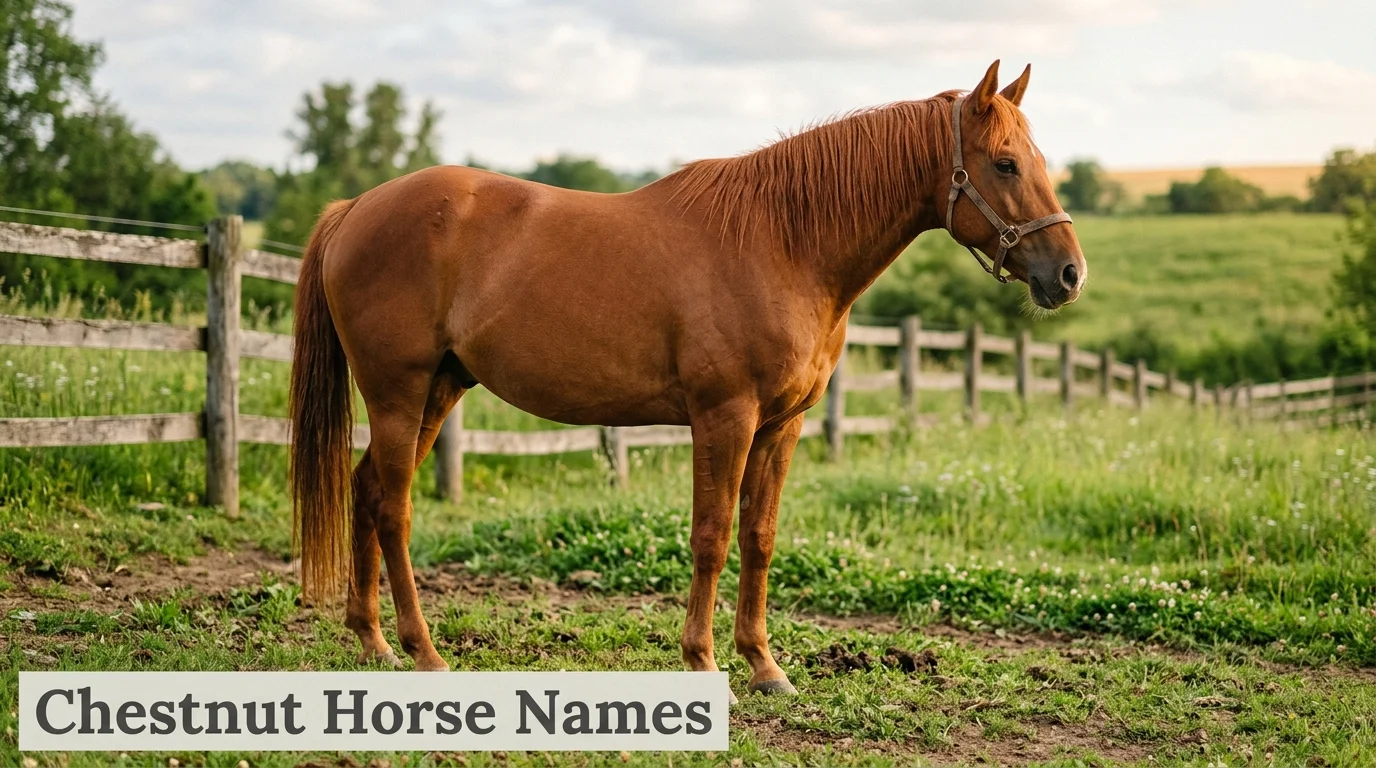
Chestnut is a solid red-to-brown coat with no black hairs anywhere on the body, which is exactly why chestnut horse names lean so hard on copper, rust, and cinnamon tones instead of the gold or silver words that fit other coat colors. Man o’ War and Secretariat, two of the most decorated racehorses in American history, were both chestnut proof the color has never needed dressing up to stand out.
I’ve owned a liver chestnut mare who looked almost black in a dim stall and full copper-red the second she stepped into sunlight, and the barn name we picked (Rusty) only made sense on sunny days. Chestnut isn’t one color. It’s a whole family of them, and the right name usually depends on which end of that family your horse falls on.
What Makes a Horse Chestnut, Exactly
Chestnut comes from a recessive gene that blocks black pigment entirely, so the coat, mane, and tail all sit somewhere on a red-to-brown scale with zero true black hairs anywhere on the horse. That’s the detail that separates chestnut from bay, which also carries red in the body but always keeps black points on the legs, mane, and tail.
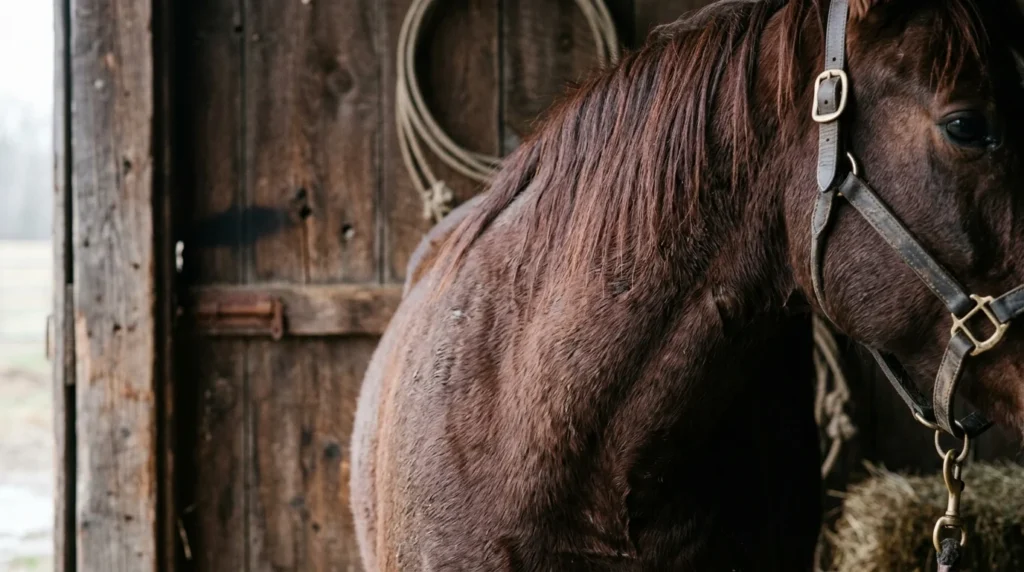
Within chestnut, the range runs from liver chestnut (a deep, almost chocolate-brown red) through red chestnut or sorrel (the classic copper shade most people picture) to flaxen chestnut (a red body paired with a noticeably lighter, almost blonde mane and tail). Stock-horse breeds like Quarter Horses often use the word “sorrel” instead of chestnut for the lighter end of that range, so you’ll hear both terms describing the same horse depending on who’s talking.
Liver Chestnut Horse Names
For the darkest end of the chestnut spectrum, a coat that reads more brown than red in low light.
- Mahogany – for the deep reddish-brown of polished wood
- Merlot – a wine-dark red with brown undertones
- Umber – an earthy pigment name, accurate for the darkest liver shades
- Cocoa – warm and brown-leaning, fits a horse that reads dark indoors
- Garnet – the gemstone’s deep red matches liver chestnut closely
- Bordeaux – another wine reference, slightly more formal
- Rust – blunt and accurate for oxidized-red liver tones
- Sienna – a burnt, earthy red-brown
- Molasses – thick, dark, and sweet-sounding
- Chestnut Oak – ties the name directly to the tree the color is named after
- Bramble – for a coat with a slightly tangled, dark-red look
- Cognac – a deep amber-brown, works for a mid-liver shade
- Cedar – woody and reddish-brown
- Copperhead – bold, slightly dangerous-sounding
- Bronze – for a liver coat with a metallic sheen in sun
- Redwood – another tree reference, tall and dark
- Terracotta – earthy and warm, a genuine match for many liver coats
- Sequoia – large and grounded, fits a bigger-bodied horse
- Brick – plain-spoken and accurate
- Ruby – gemstone-red with depth
- Oxblood – a specific, deep leather-red shade
- Walnut – dark and warm-toned
- Cinnabar – a mineral pigment, deep orange-red
- Espresso – dark and rich, works for the darkest liver coats
- Auburn – classic reddish-brown, works for horse or human hair
- Chestnut King – a straightforward nod to the color itself
- Foxglove – a flower name with a reddish tint
- Ironwood – dense, dark, and sturdy-sounding
- Cabernet – another wine-dark option
- Rouge – French for red, simple and elegant
- Marsala – a deep brownish-red, named for the wine
- Chocolate Cherry – combines two dark-red food references
- Oakwood – warm, earthy, and grounded
- Rustic – plain and fitting for a deep, earthy coat
- Brandywine – warm and slightly old-fashioned
- Copper Kettle – domestic and specific
- Firebrick – bold and architectural
- Henna – a natural reddish-brown dye reference
- Adobe Red – earthy and geographically specific
- Rowan – a tree with red berries, short and easy to say
- Deep Ember – combines fire imagery with the darker shade
- Sable Red – acknowledges the dark tone without implying true black
- Currant – a small, deep-red berry
- Blackstrap – named for blackstrap molasses, very dark and rich
- Toffee Oak – food and wood combined for a specific warm tone
Red Chestnut and Sorrel Horse Names
The classic copper-red most people picture when they hear “chestnut” bright, warm, and unmistakable.
- Copper – the most direct and accurate color match there is
- Blaze – bold and common for a bright red coat
- Ginger – warm, friendly, and instantly recognizable
- Rusty – a genuine barn favorite for good reason
- Poppy – for the flower’s bright red-orange
- Ember – glowing and warm-toned
- Cayenne – spicy and bright
- Fox – ties the coat to the animal with nearly the same color
- Cardinal – named for the bright red bird
- Rowan Red – a slightly more formal take on the tree-name option
- Paprika – spiced and warm
- Salsa – bright, bold, and a little playful
- Firecracker – energetic and loud, fits a spirited horse
- Marigold – warm and floral
- Chili Pepper – bold and direct
- Cinder – for a coat with a slightly smoky red cast
- Redwing – another bird reference, quick and light
- Scarlett – classic and a little dramatic
- Torch – bright and blazing
- Sunfire – combines warmth and brightness
- Vermilion – a true bright-red pigment name
- Crimson – deep, saturated red
- Cherry – bright and food-inspired
- Rowdy Red – playful, fits a horse with energy
- Comet – fast and bright-sounding
- Fireside – warm and domestic
- Ruddy – plain and descriptive
- Sundance – Western-flavored and warm
- Cranberry – tart and bright-red
- Persimmon – a warm orange-red fruit
- Rosehip – floral and specific
- Wildfire – bold and untamed-sounding
- Blaze of Fire – dramatic, works for a showier horse
- Redcoat – historic and blunt
- Copperfield – a longer, more formal Copper variant
- Salamander – a nod to the animal often associated with fire
- Foxfire – ties fox and flame imagery together
- Torchlight – bright and steady
- Solar Flare – bold and astronomical
- Firewheel – a red wildflower, distinctive
- Blush Copper – softer take on a strong color word
- Cayenne Rose – spice and floral combined
- Autumn Blaze – ties the coat to the season it most resembles
Flaxen Chestnut Horse Names
For a red body paired with a lighter, almost blonde mane and tail the shade most often mistaken for palomino.
- Honey – warm and directly tied to the lighter mane
- Butterscotch – rich and sweet-toned
- Amber – classic and accurate for the golden-red contrast
- Marmalade – bright citrus warmth
- Caramel – smooth and food-forward
- Sandy – plain and descriptive of the paler mane
- Wheatfield – ties to the lighter mane’s straw-blonde tone
- Goldenrod – a flower name that fits the lighter accents
- Champagne – light, bubbly, and pale-toned
- Saffron – warm yellow-gold
- Sunflower – bright and cheerful
- Blondie – blunt and accurate for the pale mane
- Toffee – warm and slightly darker than Caramel
- Praline – nutty and rich
- Flax – the literal source of the term “flaxen”
- Harvest Gold – seasonal and warm
- Honeydew – soft and pale
- Buttermilk – pale and creamy, a classic pick
- Straw – plain and descriptive of the lighter mane color
- Sunbeam – bright and light
- Goldie – simple and warm
- Nutmeg – spiced and warm-toned
- Wheaten – ties directly to the pale mane
- Barleycorn – grain-inspired and specific
- Pumpkin Spice – seasonal and currently popular
- Cider – warm, autumnal, and apt
- Dune – pale and sandy
- Almond – soft and warm
- Biscuit – simple and food-inspired
- Corn Silk – ties directly to the pale mane texture
- Honey Blaze – combines two strong warm-toned words
- Golden Ember – bridges the red body and gold mane
- Sungold – bright and direct
- Marzipan – sweet and pale
- Toasted Wheat – warm and grain-inspired
- Flaxseed – literal and specific
- Amberlight – glowing and warm
- Peachy – soft and warm-toned
- Honeysuckle – floral and sweet
- Sunwashed – evokes a coat lightened by time outdoors
- Goldspun – ties the mane to spun gold imagery
- Butterscotch Blaze – combines two strong entries
Famous Chestnuts to Borrow a Name From
Two of the most decorated Thoroughbreds in American racing history were chestnut, which makes their names a genuine, well-earned source of inspiration.
- Man o’ War – one of the greatest American racehorses of the 20th century
- Secretariat – the 1973 Triple Crown winner, still a benchmark for speed
- Big Red – Secretariat’s actual barn name, warm and direct
- Genuine Risk – a Kentucky Derby-winning chestnut mare, good counter to old chestnut-mare stereotypes
- Seabiscuit – a chestnut Depression-era champion with a genuine underdog story
- Affirmed – the last horse to win the Triple Crown before a long gap, a chestnut colt
- War Admiral – Man o’ War’s chestnut son, a Triple Crown winner in his own right
- Justify – a modern Triple Crown-winning chestnut colt
- California Chrome – a chestnut with a distinctive white blaze and near-Triple Crown run
- Funny Cide – a chestnut gelding who won the Derby and Preakness
- Phar Lap – a legendary Australian chestnut racehorse
- Barbaro – a chestnut Derby winner whose story is widely known in racing circles
- Ruffian – a champion chestnut filly considered one of the fastest of her era
- Smarty Jones – a compact, powerful chestnut colt with a big Triple Crown run
- Chrome – a shortened, modern nod to California Chrome
- Admiral’s Pride – borrows War Admiral’s naval flavor without copying the name directly
- Risk Taker – inspired loosely by Genuine Risk’s boldness
- Biscuit – a warm nod to Seabiscuit without reusing the full name
- Derby Blaze – ties racing tradition to a coat marking
- Track Star – generic but earns its place with real racing history behind it
- Fast Copper – combines the coat’s color with racing speed
- Champion’s Ember – ties glowing coat imagery to racing legacy
- Photo Finish – playful, racing-specific
- Paddock – ties to the racehorse world without naming a specific horse
- Stakes Winner – bold and directly racing-themed
- Furlong – a genuine racing distance term, short and punchy
Male Chestnut Horse Names
- Rusty – already a color-list favorite, strong enough as a top male pick
- Blaze – repeats from the red-chestnut list, common for a reason
- Duke – classic, short, and Western-leaning
- Gus – friendly and easy to say
- Bear – blunt and sturdy
- Otis – old-fashioned and approachable
- Hank – ranch-tradition name
- Zeke – short and Western
- Cody – simple, common, Western-adjacent
- Chance – fits a horse who felt like a bit of a gamble
- Roman – bold, fits a horse with presence
- Griff – short and modern
- Rocket – fast-sounding, fits an energetic gelding
- Boone – frontier-flavored
- Bishop – short and strong
- Axel – modern and punchy
- Doc – old ranch-horse tradition
- Ryder – active and current
- Beau – soft, Southern-leaning
- Cyrus – has weight without being overdone
- Sam – simple and dependable
- Levi – sturdy and short
- Jasper – warm-toned, echoes the reddish coat
- Scout – alert-sounding
- Diesel – strong and modern
- Marshal – authoritative, fits a lead horse
- Wrangler – working-ranch specific
- Yukon – geographic and bold
- Denver – Western city-name option
- Boaz – biblical and sturdy
- Tucker – easygoing and friendly
- Colt – literal and simple
- Gunner – Western and energetic
- Bandit – fits a horse who tests fences
- Chief – authoritative and traditional
- Rowdy – fits a horse with energy to spare
- Titan – broad and powerful
- Copper Jack – combines the color theme with a classic name
- Rufus – Latin-rooted, literally means “red-haired”
- Russet – a direct color word repurposed as a name
- Ferris – short, unexpected, easy to call
Female Chestnut Horse Names
- Ginger – already listed for color, strong enough as a top female pick too
- Scarlett – bold and classic
- Autumn – ties the coat to the season it most resembles
- Rosie – warm and friendly
- Willow – soft, pastoral contrast to a fiery coat
- Dixie – Southern-leaning and classic
- Harper – modern and easy to call
- Coco – warm and food-inspired
- Ivy – simple, contrasts nicely with a red coat
- Nutmeg – repeats from the flaxen list, strong enough for either
- Duchess – classic and a little formal
- Cricket – playful, fits a smaller or younger mare
- Delta – geographic, has a bit of edge
- Juniper – earthy and current
- Marlowe – smooth and literary-sounding
- Wren – short, modern, unexpected for a horse
- Georgia – Southern and warm-sounding
- Belle – simple classic mare name
- Fiona – soft and slightly literary
- Gracie – easygoing and common
- Pixie – playful, fits a smaller mare
- Opal – for a coat with a slight shimmer
- Star – simple and enduring, especially with a facial marking
- Rosalind – formal and has weight
- Winnie – friendly and approachable
- Maple – warm and food-inspired
- Ruby Rose – combines two strong warm-toned words
- Saylor – modern and smooth to say
- Marigold Rose – floral and warm at once
- Cheyenne – Western-leaning and strong
- Persimmon Rose – combines a fruit and floral note
- Autumn Rose – ties season and softness together
- Poppy Rose – doubles down on the bright-red floral tone
- Freya – Norse, short and strong
- Meadow – pastoral and calm
- Sable Rose – acknowledges depth without implying true black
- Coralie – gentle, ties loosely to warm coral tones
- Amara – means “eternal” in several languages, soft to say
- Rosalie – old-fashioned and gentle
- Blaze Marie – combines a color word with a classic middle name
- Scarlett Rose – doubles the red-and-floral theme
Nature and Autumn-Inspired Chestnut Names
Chestnut’s red-to-brown range overlaps almost exactly with fall foliage, which makes autumn imagery an easy, honest fit.
- Foliage – broad and directly tied to fall color
- Harvest – warm and seasonal
- Maple Leaf – specific and visually accurate
- October – a month name that doubles as a color cue
- Amber Woods – combines two warm-toned words
- Chestnut Grove – ties the name to the actual tree
- Sunset Ridge – geographic and warm
- Copper Canyon – bold and geographic
- Autumn Leaf – simple and seasonal
- Wildwood – earthy and untamed
- Ember Sky – combines fire imagery with openness
- Rust Valley – geographic and directly color-accurate
- Falling Leaves – gentle and seasonal
- Brushfire – bold and untamed
- Harvest Moon – warm and seasonal
- Red Maple – specific tree reference, visually accurate
- Ashwood – earthy, though lighter than the coat itself
- Foxglove Field – ties a flower name to open land
- Thicket – earthy and grounded
- Bracken – a reddish-brown fern, specific and accurate
- Coppice – a small wooded area, unusual and grounded
- Woodsmoke – warm and slightly hazy
- Cinder Path – combines fire imagery with a journey
- Meadowfire – bright and pastoral at once
- Redbud – a real flowering tree with reddish blooms
- Sumac – a plant known for brilliant red fall color
- Amberfall – ties the season directly to the color
- Highland Fox – geographic and animal-inspired
- Cedar Ridge – earthy and grounded
- Bramblewood – tangled and warm-toned
Food and Spice-Inspired Chestnut Names
- Cinnamon – warm, spiced, and a genuine barn favorite
- Nutmeg Spice – doubles down on the warm-spice theme
- Chili – bold and direct
- Paprika Rose – spiced and floral together
- Molasses Cookie – rich and warm
- Brown Sugar – classic and warm-toned
- Bourbon – smoky and warm, fits a darker coat
- Root Beer – playful and American
- Gingerbread – seasonal and warm
- Butter Pecan – rich and food-forward
- Toasted Almond – pale and warm, fits a lighter chestnut
- Honey Bun – playful and sweet
- Sweet Tea – Southern-leaning and warm
- Apple Cider – autumn-flavored
- Salted Caramel – sweet with an edge
- Maple Bourbon – combines two strong warm-toned words
- Peanut Brittle – textured and playful
- Chai Spice – spiced and current
- Hazelnut – warm and nutty
- Amaretto – smooth and warm-toned
- Cocoa Bean – rich and warm
- Roasted Chestnut – warm, specific, and ties directly to the color’s namesake
- Cornbread – earthy and playful
- Toffee Apple – combines two warm, sweet tones
- Golden Ale – for an owner who wants a brewery-flavored name
- Cider House – ties autumn and warmth together
- Brandy – classic and smooth to say
- Praline Pecan – nutty and rich
- Spice Cake – warm and seasonal
- Marmalade Toast – bright citrus warmth with a food twist
How to Actually Choose From This List
Start by figuring out which end of the chestnut range your horse actually sits on, since a liver chestnut and a flaxen chestnut can look like entirely different animals side by side. Say your shortlist out loud at a distance before deciding, because a name that reads well on paper can get lost when you’re calling it across a pasture. If your horse already has a formal show name, pick a barn name that sounds nothing like it, so nobody mishears one for the other during a lesson or a vet visit.
Common Mistakes When Naming a Chestnut
Naming a horse “Red” or “Rusty” without checking the barn roster first is the single most common mistake, since chestnut is one of the most widespread coat colors and those two names get reused constantly at any boarding facility. Assuming every chestnut is the same shade is another one a name built around “fire” imagery can look strange on a dark liver chestnut that barely reads red at all.
And leaning on the old “chestnut mares are difficult” stereotype when picking a personality-based name isn’t backed by anything beyond barn folklore, so it’s worth skipping that angle entirely.
If your chestnut leans more toward bright copper than deep brown, our red horse names list dives deeper into that specific end of the color range. Chestnut and bay get mixed up constantly since both carry red in the coat, so our bay horse names guide is worth a look if you’re not sure which one you actually have. A flaxen chestnut’s pale mane gets mistaken for palomino often enough that our palomino horse names page has some crossover appeal too.
For a coat that leans lighter and more tan overall, check our tan horse names list next. And if you want a broader pool of names tied to famous horses across every color, not just chestnut racing legends, our famous horse names guide has more.
Chestnut Horse Names FAQ
No. Bay horses have red-to-brown bodies but always carry black points on the mane, tail, and lower legs, while a true chestnut has no true black hairs anywhere on the horse.
Secretariat, the 1973 Triple Crown winner, is widely considered the most famous chestnut horse in American racing history, alongside Man o’ War from an earlier era.
Yes chestnut is one of the most widespread coat colors across nearly every horse breed, and several breeds, including Haflingers and Suffolk Punches, are exclusively chestnut.