
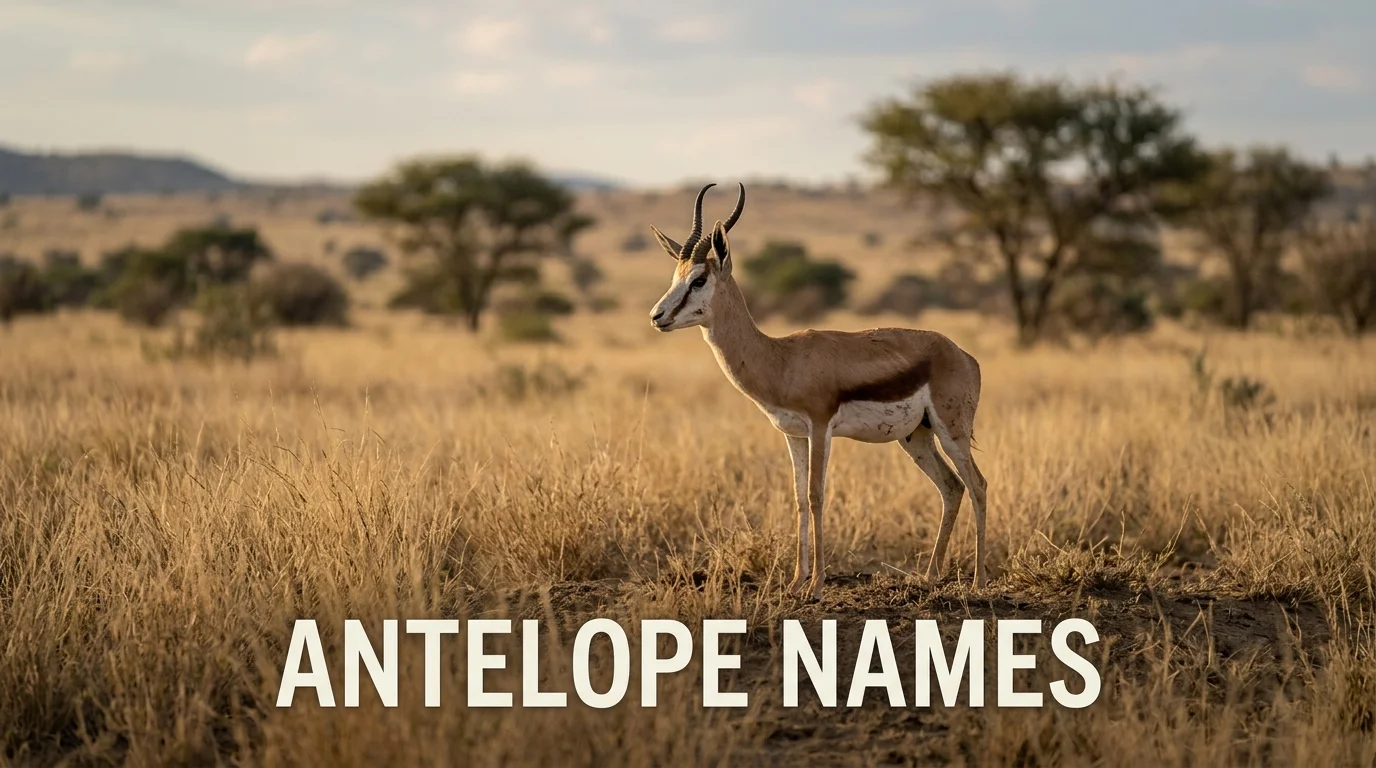
There are roughly 90 recognized antelope species, ranging from the dik-dik, barely bigger than a hare, up to the giant eland, which can stand taller than a horse. That range is exactly why antelope names mean something different depending on which antelope you’re picturing.
Most people land here for a wildlife-park mascot, a sanctuary animal, a game farm calf, a plush toy, or a character in a story. A few are naming an actual antelope they track or care for professionally. Either way, the same rule applies everywhere else: say the name out loud before you commit to it.
One thing worth knowing upfront a name doesn’t need to be African just because most antelope species are. Plenty of the strongest options below are short, practical, and built to carry across open ground, which matters more than most naming guides admit.
Top 10 Largest Antelope Species
Here’s the actual data most antelope name pages skip. Weights are commonly cited estimates and vary by region, subspecies, and individual animal.
| Rank | Species | Typical Male Weight | Notable Trait |
|---|---|---|---|
| 1 | Giant Eland | approx. 900–950 kg | Tallest of all antelope species |
| 2 | Common Eland | approx. 400–900 kg | Widest range across East and Southern Africa |
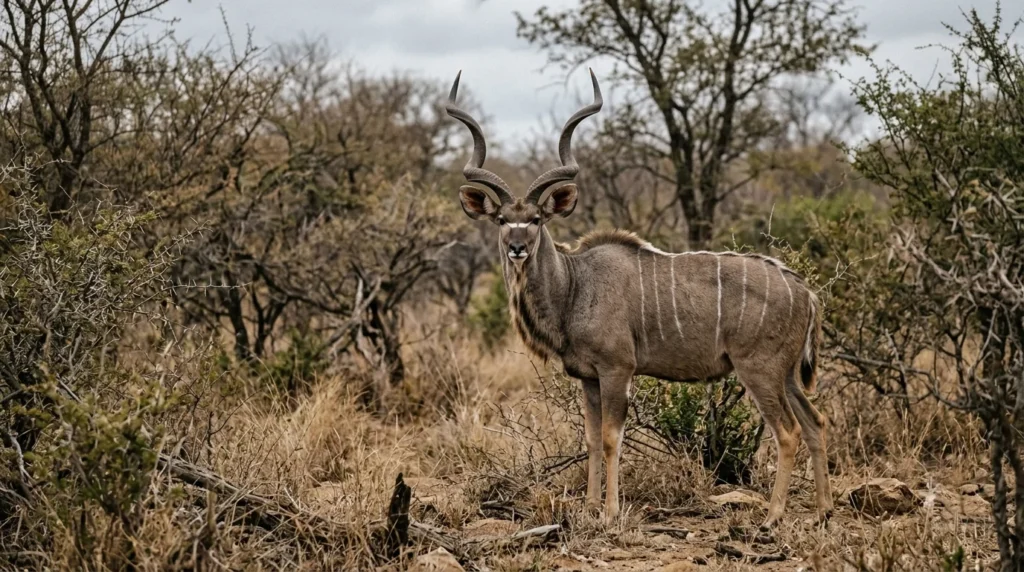
| 3 | Greater Kudu | approx. 190–315 kg | Famous for long, spiral horns |
| 4 | Waterbuck | approx. 200–300 kg | Sturdy build, rarely far from water |
| 5 | Roan Antelope | approx. 220–300 kg | One of Africa’s largest true antelope |
| 6 | Sable Antelope | approx. 200–270 kg | Dramatic curved horns, dark coat in mature males |
| 7 | Gemsbok (Oryx) | approx. 180–240 kg | Desert-adapted, bold facial markings |
| 8 | Blue Wildebeest | approx. 180–290 kg | Known for massive seasonal migrations |
| 9 | Nyala | approx. 100–140 kg | Smaller, but a striking striped coat |
| 10 | Bongo | approx. 150–400 kg | Rare forest antelope with a chestnut coat |
Names Inspired by Real Antelope Species
These borrow the actual species names, each with the trait that makes it distinct useful if you want something that means exactly what it says.
- Oryx – a large antelope with long, straight horns, found in African and Arabian deserts
- Kudu – known for long, spiral horns and a grey-brown coat
- Nyala – a striped antelope of southern Africa; males are much darker than females
- Impala – famous for near-vertical leaps to escape predators
- Springbok – South Africa’s national animal, known for a stiff-legged jumping display called pronking
- Eland – the largest antelope species in the world
- Gazelle – a slender, swift antelope found across Africa and parts of Asia
- Addax – a pale, desert-adapted antelope with twisted horns, critically endangered in the wild
- Waterbuck – stays close to rivers and lakes, with a shaggy grey-brown coat
- Bongo – a rare forest antelope with a bright chestnut coat and white stripes
- Topi – a fast-running antelope with a glossy, reddish-brown coat
- Hartebeest – an antelope with an elongated face and ridged, lyre-shaped horns
- Dikdik – one of the smallest antelope species, barely larger than a hare
- Gerenuk – known for an unusually long, slender neck used to reach high branches
- Blackbuck – native to India; males darken to near-black as they mature
- Nilgai – the largest antelope in Asia, with a bluish-grey coat on adult males
- Saiga – a distinctive antelope with a large, flexible nose adapted to filter dust
- Klipspringer – lives on rocky cliffs and balances on the tips of its hooves
- Duiker – a small, shy antelope named for its habit of diving into thick brush
- Reedbuck – found near reed beds and tall grass, known for a whistling alarm call
- Steenbok – a small, solitary antelope of southern Africa’s open plains
- Oribi – a small, graceful antelope known for bounding leaps when startled
- Bushbuck – a shy, striped antelope that prefers dense forest cover
- Sitatunga – a swamp-dwelling antelope with splayed hooves for walking on soft mud
- Lechwe – found in flooded grasslands, strong swimmers that can outrun predators through water
- Puku – a golden-coated antelope closely related to the waterbuck
- Grysbok – a tiny, shy antelope found mainly in South Africa
- Suni – one of Africa’s smallest antelope species, rarely seen in the open
- Wildebeest – also called a gnu, famous for its massive annual migration across the Serengeti
- Pronghorn – native to North America, the fastest land mammal in the Western Hemisphere
- Chiru – the Tibetan antelope, historically prized for its extremely fine wool
- Beira – a rare, small antelope found only in parts of Somalia and Ethiopia
- Dibatag – known for carrying its tail curled over its back like a dog
- Gemsbok – a large oryx species with striking black-and-white facial markings
- Bontebok – a rare South African antelope with a glossy dark coat and white face blaze
- Blesbok – closely related to the bontebok, named for the white blaze on its face
- Tsessebe – considered one of the fastest antelope species over long distances
- Korrigum – a subspecies of topi found in West Africa’s savanna belt
- Hirola – one of the world’s rarest antelope species, found only in a small part of Kenya and Somalia
- Roan – a large antelope named for its reddish-roan coat color
Antelope Names for Females (With Meaning)
- Zuri – Swahili for “beautiful”
- Amani – Swahili for “peace”
- Nia – Swahili for “purpose”
- Jasiri – Swahili for “brave,” good for a bold, confident doe
- Asha – Swahili and Hindi for “hope”
- Malaika – Swahili for “angel”
- Imani – Swahili for “faith”
- Sanaa – Swahili for “art” or “creativity”
- Naledi – Setswana for “star”
- Thandiwe – Zulu for “beloved”
- Zola – Zulu for “quiet” or “calm”
- Amara – used across several languages to mean “eternal” or “grace”
- Freya – Norse, means “lady,” also the name of a goddess linked to beauty
- Celeste – Latin for “heavenly”
- Aurora – Latin for “dawn”
- Savanna – the open grassland habitat most antelope species call home
- Sierra – Spanish for “mountain range”
- Serena – Latin, means “calm” or “serene”
- Skye – Scottish, evokes open sky and wide plains
- Ember – a glowing coal, warm and bold
- Dawn – the first light of morning
- Autumn – the season, a soft and earthy option
- Melody – a pleasing sequence of musical notes
- Harmony – a Latin-rooted word meaning agreement or unity
- Grace – elegant movement, fits an animal known for its poise
- Faith – trust or belief
- Hope – an expectation of something good
- Joy – a feeling of great happiness
- Meadow – an open grassy field, close to antelope habitat
- Brook – a small, flowing stream
- River – a larger flowing body of water
- Fawn – a young deer, close enough in spirit to a young antelope
- Doe – a female deer, sometimes used loosely for antelope too
- Regina – Latin for “queen”
- Reina – Spanish for “queen”
- Malika – Arabic and Swahili for “queen”
- Adia – Swahili, often translated as “gift”
- Willow – a tree known for bending instead of breaking in the wind
- Juniper – a hardy, berry-bearing shrub
- Wren – a small, quick-moving bird
- Hazel – a tree tied to wisdom in old folklore
- Opal – a pale, glowing gemstone
- Marigold – a bright, resilient flower
- Coral – the ocean’s living garden, soft and colorful
- Sienna – an earthy reddish-brown color
- Nadia – Arabic and Slavic for “hope”
- Layla – Arabic for “night”
- Amira – Arabic for “princess”
- Kaya – Swahili, often translated as “home” or “rest”
- Zara – Arabic for “blooming flower”
- Lulu – Arabic and Swahili for “pearl”
- Safiya – Arabic for “pure”
- Nadira – Arabic for “rare” or “precious”
- Kiara – Italian and Irish roots, means “bright” or “clear”
- Nalani – Hawaiian for “calm skies”
Antelope Names for Males (With Meaning)
- Jabari – Swahili for “brave”
- Tau – Setswana for “lion”
- Jelani – Swahili, often translated as “mighty”
- Zuberi – Swahili for “strong”
- Thabo – Sesotho for “joy”
- Sipho – Zulu for “gift”
- Kwame – a traditional Akan name for boys born on Saturday
- Bomani – Swahili, often translated as “warrior”
- Rafiki – Swahili for “friend”
- Baraka – Swahili and Arabic for “blessing”
- Sultan – an Arabic title for a ruler
- Amir – Arabic for “prince” or “commander”
- Malik – Arabic for “king”
- Khalid – Arabic for “eternal”
- Zephyr – Greek, the god of the west wind
- Orion – the hunter constellation
- Atlas – the Titan who held up the sky in Greek myth
- Apollo – the Greek god of the sun and archery
- Ajax – a legendary Greek warrior known for his strength
- Titan – one of the powerful deities that preceded the Greek gods
- Hercules – the Roman name for the mythical strongman Heracles
- Maximus – Latin for “greatest”
- Magnus – Latin for “great”
- Rex – Latin for “king”
- Kaiser – German for “emperor”
- Duke – an old English noble title
- Baron – another old English noble title
- Scout – quick, alert, always watching
- Blaze – a bright burst of fire
- Storm – sudden, powerful bursts of energy
- Thunder – the sound that follows lightning
- Bolt – fast as a lightning strike
- Dash – built for a short, explosive burst of speed
- Flash – a nod to raw speed
- Ridge – a raised line of hills across open terrain
- Canyon – a deep, dramatic valley
- Kili – short for Kilimanjaro, Africa’s tallest mountain
- Sahara – the vast desert spanning much of North Africa
- Kalahari – the desert region across Botswana, Namibia, and South Africa
- Zambezi – one of Africa’s major rivers
- Nile – the longest river in Africa
- Kruger – named after South Africa’s well-known Kruger National Park
- Serengeti – the vast Tanzanian plains famous for huge grazing herds
- Onyx – a black gemstone
- Flint – a stone that sparks fire when struck
- Diesel – a strong, rugged-sounding modern name
- Bear – broad and powerful-sounding, despite the size difference
- Wolf – a nod to raw wildness and instinct
- Hawk – a sharp-eyed bird of prey
- Falcon – one of the fastest birds in the world
- Talon – a sharp claw, a nod to being formidable
- Fang – a sharp tooth, blunt and direct
- Steel – tough, strong, and unbending
- Chief – a leader of a group
- Ranger – someone who patrols and protects open land
Savanna and Nature-Inspired Names
- Baobab – Africa’s “tree of life,” able to store water for years in its trunk
- Acacia – a thorny, umbrella-shaped tree common across African savanna
- Marula – a southern African fruit tree, famous for fruit that wildlife seek out each year
- Mopane – a hardy tree found across much of southern Africa’s dry woodland
- Veld – the open grassland landscape found across much of southern Africa
- Bushveld – a mixed grassland and woodland terrain common in South Africa
- Oasis – a fertile, watered spot in an otherwise dry landscape
- Mirage – the shimmering optical illusion seen across hot, open plains
- Horizon – the line where land meets sky
- Plains – wide, flat, open grassland
- Prairie – a large area of flat grassland
- Steppe – a dry, grassy plain found across parts of Europe and Asia
- Tundra – a cold, treeless landscape
- Monsoon – the seasonal rains that transform dry grassland almost overnight
- Daybreak – the first light of morning, when many antelope are most active
- Nightfall – the transition into evening, another active period for many species
- Equator – the imaginary line that runs through much of antelope habitat
- Tropic – short for “tropical,” evokes warm, open landscapes
- Delta – a fan-shaped wetland where a river spreads out before reaching the sea
- Okavango – a famous river delta in Botswana, home to huge herds of grazing animals
- Mara – short for the Maasai Mara, a well-known Kenyan savanna reserve
- Etosha – a major national park in Namibia built around a vast salt pan
- Kgalagadi – a transfrontier park spanning South Africa and Botswana
- Amboseli – a Kenyan national park known for open plains and views of Kilimanjaro
- Ngorongoro – a massive volcanic crater in Tanzania that shelters dense wildlife
- Hwange – Zimbabwe’s largest national park
- Savuti – a wildlife-rich region within Botswana’s Chobe National Park
- Timbavati – a private game reserve bordering South Africa’s Kruger National Park
- Luangwa – a river valley in Zambia known for dense wildlife populations
- Thicket – dense, tangled brush that offers cover from predators
- Grassland – open terrain covered in grasses rather than trees
- Highveld – the elevated plateau grassland found in parts of South Africa
- Lowveld – the lower-lying bushveld region of South Africa
- Waterhole – a natural gathering point where wildlife comes to drink
- Canopy – the upper layer of leaves and branches in wooded terrain
Speed and Grace Names
Antelope are built for speed, so this angle actually fits, rather than being borrowed for the sake of it.
- Swift – simply and directly fast
- Streak – a quick blur of movement
- Zoom – the sound and feel of rapid motion
- Rapid – moving with great speed
- Velocity – the scientific term for speed in a given direction
- Sprint – a short, all-out burst of running
- Gallop – the fastest natural gait for a hooved animal
- Bound – a controlled, powerful leap
- Leap – a jump, often used to clear obstacles or escape danger
- Pounce – a sudden, springing movement
- Glide – smooth, effortless-looking motion
- Flicker – a quick, darting movement, gone before you can focus on it
- Blitz – a sudden, fast, forceful action
- Quicksilver – an old name for liquid mercury, used for something fast and hard to catch
- Jet – fast and sleek
- Rocket – built for sudden acceleration
- Turbo – a nod to extra speed and power
- Nitro – short for nitrous oxide, associated with a speed boost
- Zippy – lively and quick
- Breeze – light, easy, moving air
- Whirlwind – a fast-spinning column of air
- Cyclone – a large, powerful spinning storm
- Tempest – an old word for a violent storm
- Spark – a small, quick burst of energy
- Whisk – to move something away quickly
- Fleet – an old-fashioned word that literally means “fast”
- Nimble – quick and light on your feet
- Agile – able to move quickly and easily
- Hustle – fast, purposeful movement
- Sprinter – built for short bursts of speed
Baby Antelope (Calf) Names
- Pip – small and quick, like a seed
- Tiny – simple and direct for a small calf
- Pebble – small and smooth
- Button – small, round, and endearing
- Biscuit – warm and soft, a cozy nickname
- Peanut – a classic small-and-cute pet name
- Nugget – small, golden, and precious
- Dot – tiny and simple
- Speckle – a nod to spotted coat patterns some young antelope have
- Freckle – another nod to small coat markings
- Clover – a small, common plant, soft-sounding
- Daisy – a simple, cheerful flower name
- Pippin – an old-fashioned name for a small apple, playful and bouncy
- Nutmeg – a warm spice, soft-sounding
- Cinnamon – another warm spice name, fits a reddish-brown coat
- Ginger – a spice name that also describes a reddish coat color
- Honey – warm, golden, and sweet
- Maple – a tree known for warm, syrupy sweetness
- Pumpkin – round, warm, and affectionate
- Marshmallow – soft and sweet
- Cricket – a small, energetic insect known for constant motion
- Sprout – something small just starting to grow
- Bean – tiny and simple
- Poppy – a bright, cheerful flower
- Tulip – another cheerful flower name
- Buttercup – a small, bright yellow flower
- Cupcake – sweet and small
- Sugar – simple and affectionate
- Twinkle – a small, quick sparkle of light
- Squirt – playful, a nod to a small, quick young animal
Strong and Bold Names
- Valor – courage in the face of danger
- Honor – integrity and respect, earned through action
- Justice – fairness and moral rightness
- Glory – great honor or distinction
- Victory – the state of having won
- Legend – a story or figure remembered for greatness
- Legacy – something significant left behind
- Fury – intense, powerful energy
- Rage – a wilder, more explosive version of fury
- Might – raw strength or power
- Force – physical power or strength in motion
- Iron – a metal associated with toughness and durability
- Vanguard – the foremost position in an advancing group
- Sentinel – someone who stands watch and guards
- Guardian – a protector
- Warden – someone responsible for keeping watch over something
- Champion – someone who has proven themselves the best
- Crusader – someone devoted to a bold cause
- Knight – a medieval warrior sworn to a code of honor
- Paladin – a legendary champion or heroic warrior
- Gladiator – a warrior trained to fight for spectators in ancient Rome
- Spartan – from the ancient Greek city known for its disciplined warriors
- Viking – seafaring Norse warriors known for strength and daring
- Warrior – a fighter, broadly and directly
- Brawn – physical strength and muscle
- Grit – toughness and resilience under pressure
- Rugged – tough, sturdy, built for rough terrain
- Bold – fearless and confident
- Fearless – without fear, direct and simple
- Stalwart – dependable and strong, someone you can count on
Short and Simple Names
Wildlife guides and sanctuary keepers usually pick names by a different rule than pet owners: it has to be shoutable across a field. These are all one or two syllables.
- Rio – Spanish and Portuguese for “river”
- Kip – short, simple, quick to say
- Zed – the British and Commonwealth way of saying the letter Z
- Ace – top of the class, one syllable
- Jax – a modern, punchy short name
- Max – short for “maximum,” works fine on its own
- Leo – Latin for “lion”
- Remy – short, soft, easy to call across a field
- Finn – Irish origin, short and lively
- Tag – quick, playful, one syllable
- Fox – borrowed from the quick, clever animal
- Fizz – light, bubbly, quick to say
- Zip – short for quick motion, easy to call
- Nova – Latin-rooted, means “new,” short and bright-sounding
- Sam – a classic short name
- Cole – short, cool-sounding, easy to call
- Reed – a tall grass that grows near water
- Wade – to walk through water, short and grounded
- Cy – a short, old-fashioned nickname
- Roo – short, bouncy, playful
- Kai – Hawaiian for “sea”
- Sol – Spanish and Latin for “sun”
- Tex – short, punchy, a little rugged
- Zeb – short for Zebulon, punchy on its own
- Gus – short, friendly, easy to call
- Otto – short, a palindrome, easy to remember
- Nell – short, old-fashioned, easy to call
- Mo – about as short as a name gets
- Pia – short, soft, easy to say
- Ren – short, modern, easy to call
How to Pick a Name From This List
Match the name to the actual species if you know it. “Gemsbok” reads oddly on a springbok, and the reverse is just as true, so check which antelope you’re actually naming before you commit to a species-based option.
If you’re naming an animal you’ll be calling across open terrain a game farm, a sanctuary enclosure, a safari-park mascot the Short and Simple section above will genuinely carry further than a four-syllable name will.
Skip anything borrowed directly from a specific ethnic group as a label rather than a name “Maasai” itself, for instance, names a living community, not a naming theme, which is why this list uses “Mara” instead.
Common Mistakes to Avoid
Naming a real antelope after a copyrighted character. Skip anything tied directly to a specific movie gazelle or antelope character; it’s an easy trap for this particular animal and it’s simple enough to avoid.
Picking a name before checking the sex. Several names above lean masculine or feminine by convention (Malik versus Malika, for example), and it’s an easy swap to miss in the moment.
Assuming every antelope looks the same. A name built around spiral horns fits a kudu, not a gazelle matching a species-based name to the wrong animal undercuts the whole point of picking one.
Going too long for a working name. “Timbavati” is a beautiful word and a rough one to shout twice a day at feeding time.
Naming More Than One
Antelope herds are naturally grouped, so naming several at once reads better when the names share a category instead of getting picked at random. Two calves from the same litter or intake group land well with a matched pair from the Baby Antelope section, the same way our cow names page works for calves in the same wider Bovidae family antelope belong to.
Antelope sharing a watering hole with other savanna species is also a real thing worth naming around if you’re naming a mixed group, our elephant names guide pairs naturally with the savanna-themed names above for the same enclosure or safari setting.
For anyone naming a predator-and-prey pairing, or just drawn to the antelope’s biggest natural threat, our cheetah names list is the obvious next stop, since cheetahs and antelope share the same open terrain and the same reason for being fast.
If the desert-adapted species on this list caught your eye the addax, oryx, or gemsbok our camel names page covers the same arid-landscape territory from a different angle.
Antelope are also, technically, part of the same family as cattle, so a few names built for a barn work here too; our deer names guide is the closer cousin in both look and behavior if none of the above quite fit. For every other species on the site, our full animal names hub is the place to keep browsing.
Ninety species is a lot of ground to cover, and no single name works for all of them. Pick the one that actually matches the animal in front of you, say it out loud once, and go with it.
Frequently Asked Questions
Antelope isn’t one species it’s a broad name for roughly 90 different hoofed, horned grazing mammals in the family Bovidae, most native to Africa with a few found across Asia.
By typical weight: giant eland, common eland, greater kudu, waterbuck, roan antelope, sable antelope, gemsbok, blue wildebeest, nyala, and bongo, in roughly that order, though bongo weights vary widely.
There’s no single substitute, since “antelope” already covers dozens of species. In North America, the pronghorn is often casually called an antelope even though it belongs to a different family, and the wildebeest is commonly called a gnu.
Strong, geography-rooted names like Kruger, Atlas, or Ranger work well, along with speed-themed options like Bolt or Storm.
Soft, meaningful names like Zuri, Freya, or Savanna are popular picks, along with grace-themed options like Serena or Aurora.
Around 90 species are currently recognized, spread across roughly 30 genera, though exact classification is still debated among zoologists.
A baby antelope is called a calf. Depending on the species, the mother is called a doe or cow, and the father a buck or bull.