
To choose a pet name that fits, run every candidate through three checks: the sound test, the match test, and the shortlist test. Pick a name of one or two syllables that does not sound like a command, match it to your animal’s breed, coat, or personality, then live with your top three for a day each before you commit. The data below shows what everyone else is choosing — and how to pick something better than the first name that comes to mind.
Last updated: 26 November 2026. Researched, reviewed and edited by Liam.
What the data says: the names people actually choose
Two organisations publish real numbers on pet names, and they agree on the headline: the top of the chart barely moves. The American Kennel Club’s 2025 list, built from registration statistics and Canine Partners enrollments and released on 13 November 2025, put Luna at number one for girl dogs again and Max back at number one for boys. The shake-up was underneath: Hank jumped from 35th in 2024 to 2nd in 2025, Ruby rose from 16th to 5th for girls, and Milo — the previous year’s top boy name — fell to 12th.
Rover’s 14th annual Top Pet Names report, released on 20 October 2026 from millions of user-submitted names, tells the same story from the other side. By volume, the most popular names in the US are Charlie and Luna for dogs and Milo and Luna for cats — steady, familiar, human-sounding names. The movement is at the edges: the fastest-rising dog name was Rumi (up 71%, after the animated film KPop Demon Hunters) and the fastest-rising cat name was Chicken Nugget (up 82%, after a viral meme). In Canada, Ernie rose 89% for dogs; in the UK, Sunnie rose 1,287%.
What that means for you is simple. A top-ten name is a safe name — short, friendly, easy to call — but you will share it. There will be another Luna at the vet and another Max at the park, and your dog will hear its name called by strangers. A trending name is a time capsule: it will always sound like the year you got your pet. Neither choice is wrong. Just make it on purpose. Our dog names hub and cat names hub mark the classics and the trends side by side, so you can see which list you are picking from.
Sources: AKC, Most Popular Dog Names of 2025; Rover, 14th Annual Top Pet Names Report (2026).
The sound test: names pets learn fastest
The names pets learn fastest are short, sharp at the start, and impossible to mistake for a command. One or two syllables is the standard trainer advice, and owners already follow it: two-syllable names make up nearly half of all names in Rover’s database, and names ending in an “ee” sound — Daisy, Lily, Milo’s cousins — close 26% of dog names and 27% of cat names. Two syllables give you a pitch change to play with (“Mi-LO!”), which carries farther and sounds friendlier than a flat single beat.
Start the name with a hard consonant if you can. K, T, D, B and P sounds have a clean edge that cuts through household noise; a name that opens with a soft vowel or an “h” can blur into the sentence around it. This is a head start, not a law — a soft name like Willow works fine, especially indoors — but if two names tie on meaning, pick the one with the sharper opening.
Names that clash with commands
The one hard rule is this: never pick a name that sounds like a cue you plan to teach. Your pet hears a sound pattern, not a word, so a name that rhymes with a command asks it to tell two near-identical sounds apart. These are the classic collisions:
| Name to avoid | Sounds like | Try instead |
|---|---|---|
| Kit | Sit | Pixie, Kiki |
| Bo, Joe, Poe | No | Bodhi, Jasper |
| Ray, Kay | Stay | Remy, Kira |
| Kate, Nate | Wait | Kiki, Nash |
| Neil | Heel | Niko |
| Dutch | Touch | Dash |
| Brooke | Look | Birdie |
Run the same check against the other names in your house. Rosie and Josie, or a cat called Milo and a child called Miles, will blur together at exactly the moment you need one of them to listen.
The shout-it-across-the-yard test
Say the name at full volume, the way you would call a dog back from the far end of a field. Then say it in a happy voice, then a firm one. A good name survives all three: it stays recognisable, it does not turn into a different word, and you are not embarrassed to shout it in public. If you would whisper it at the vet’s reception desk, cross it off now. Sound is only the head start, though — the name sticks because of consistent, rewarded repetition, which is why we wrote a separate guide to teaching your dog its name in 7 days.
Match the name to the animal
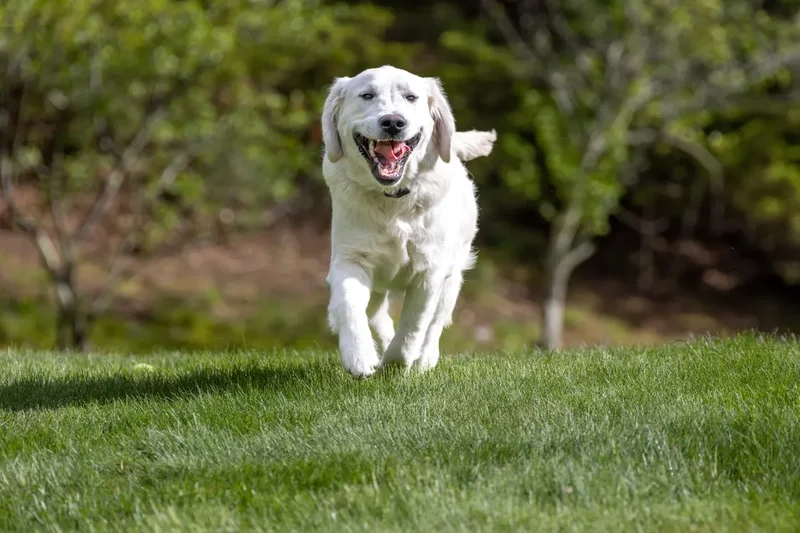
A name fits when it suits the animal in front of you — its breed, its coat, or the personality it actually has, not the one the breed standard promises. The tables below are starting points, each with the reason behind the style, so you can adapt them instead of copying them.
Dog breeds: name styles that fit
| Breed | Name style | Why it fits |
|---|---|---|
| Border Collie | Short, sharp working names (Finn, Tess, Pip) | A fast, intense herding dog needs a name you can fire off mid-run; one or two syllables with a hard start match the pace. |
| French Bulldog | French names (Pierre, Colette, Hugo) | The breed’s Parisian roots make French names feel natural, and most are two syllables with clear endings. |
| German Shepherd | Strong German names (Kaiser, Heidi, Bruno) | A loyal, serious working breed carries a sturdy name well; avoid anything that sounds like a protection command. |
| Dachshund | German and food-pun names (Wurst, Pretzel, Otto) | The breed is German and sausage-shaped; the joke lands because it is true, and the names are short. |
| Siberian Husky | Northern names (Sitka, Yukon, Aurora) | A sled dog from the far north suits place-and-sky names; check the shout test — huskies are called across distance. |
| Basset Hound | Old-soul names (Walter, Mabel, Otis) | Slow, solemn and famously mournful-looking; a grandparent name matches the face and the pace. |
One warning that applies to every breed: do not name a puppy for a trait it will outgrow. “Tiny” is a fine joke for a Great Dane puppy and a confusing one for the 60-kilo adult. Name the dog it will become.
Horse coat colours: name styles that fit
| Coat colour | Name style | Why it fits |
|---|---|---|
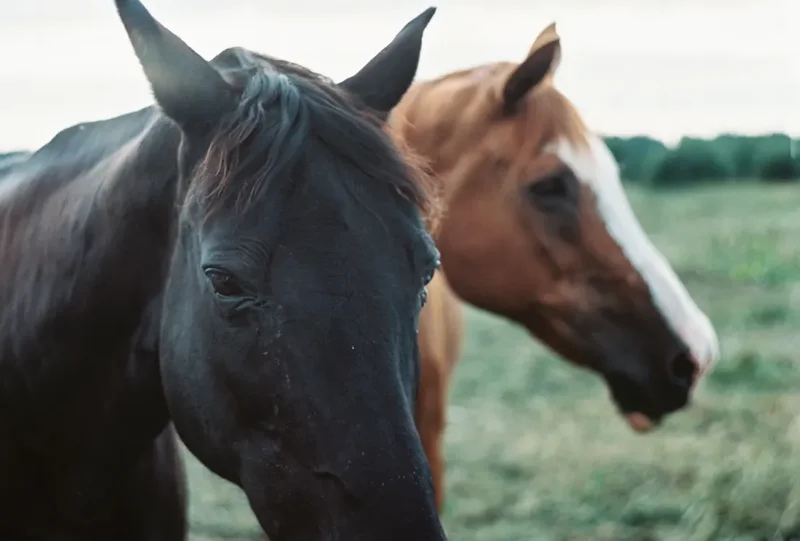
| Black | Night and stone names (Midnight, Onyx, Raven) | A true black coat reads as darkness and polish; the names echo the colour without describing it literally. |
| Chestnut | Copper and fire names (Ember, Rusty, Copper) | Chestnut is a red-brown coat that glows in sun; warm-metal and ember names match the shine. |
| Palomino / buckskin | Gold names (Goldie, Honey, Nugget) | Both coats are golden dilutions; gold-themed names are the obvious, honest fit. |
| Grey | Silver and storm names (Sterling, Nimbus, Slate) | Greys lighten with age, so silver and weather names age with the coat instead of fighting it. |
| Paint / pinto | Patch names (Patches, Domino, Splash) | The pattern is the point of the coat; patch-and-spot names celebrate it. |
| Roan | Speckled names (Freckles, Pepper, Dapple) | A roan coat is white hairs mixed through colour; speckle names describe exactly what you see. |
Coat-based names are the easiest to live with because the coat is the first thing anyone sees. For full lists by colour, breed and letter, start at our horse names hub — and if your horse will be registered, read the registry rules below before you fall for a long show name.
Cat temperaments: name styles that fit
| Temperament | Name style | Why it fits |
|---|---|---|
| Bold explorer | Adventure names (Marco, Scout, Nova) | A cat that investigates everything earns a traveller’s name; short forms still pass the sound test. |
| Shy and gentle | Soft names (Willow, Miso, Wren) | A quiet cat suits a quiet name; soft openings are fine for an indoor cat who is never called across a field. |
| Regal and aloof | Royal names (Duchess, Caesar, Cleo) | Some cats run the house; a title-name is funny because it is accurate. |
| Chaotic comic | Food names (Pickle, Waffles, Biscuit) | Food names are the fastest-rising cat trend (Chicken Nugget, up 82% in Rover’s 2026 report) and suit a clown. |
| Chatty shadow | Two-syllable people names (Milo, Luna, Hugo) | A cat that follows and talks to you gets called constantly; a friendly two-syllable name is easy to say all day. |
Temperament names take a week or two to earn — a kitten’s first-day behaviour is mostly nerves. If you want names by theme instead, our cat names hub groups them by coat, colour and character.
Registered vs barn names: the horse rules
Most horses live with two names: a registered (show) name on their papers and a short barn name everyone actually uses. The registered name is where owners get caught out, because the registries cap its length — and the caps are tight. The Jockey Club, which registers Thoroughbreds in the US, Canada and Puerto Rico, allows 18 characters at most, including spaces and punctuation, under Rule 6 of the American Stud Book. The American Quarter Horse Association (AQHA) allows 20 characters, including spaces and numbers — a limit AQHA itself explains as a computer-system constraint.
The other rules matter as much as the length. The Jockey Club takes up to six name choices per application, bars names already in use or protected for their place in racing history, requires written permission to name a horse after a living person, and bans initials-only names, all-number names, horse-related terms like “filly” or “stallion”, and anything vulgar or commercial; its registrar has put rejections at about 30% of submissions. AQHA bans punctuation outright — a name is registered as “Docs”, never “Doc’s” — allows numerals only at the end with a space before them, and also requires written permission for celebrity names, even deceased ones such as John Wayne.
The practical lesson: count the characters before you fall in love with a long, clever show name, and choose the barn name with the same care as any pet name — it is the one you will shout across a paddock. Our guide to show names vs barn names walks through the full rulebook and a five-step method for building a pair that works, so we will not repeat it here. Sources: The Jockey Club (Rule 6, American Stud Book); AQHA, Naming Your AQHA Foal.
Meanings you can trust
Plenty of name lists print a one-line meaning next to every name, and plenty of those meanings were invented — or copied from another list that invented them. A meaning you cannot trace is decoration, not information. The fix is a two-minute check, and it is worth doing for any name you choose because of its meaning.
How to check a meaning in two minutes
Start with a source that shows its working. Behind the Name gives etymology and usage history for given names; Etymonline and Wiktionary trace ordinary words; breed registries settle registered-name conventions. Cross-check two of them. Real meanings name a language and a root: Luna is Latin for “the moon”, and Max is a short form of Maximilian, from Latin maximus, “greatest” — both verifiable in seconds.
Be suspicious of meanings with no language attached (“means ‘brave warrior’ in Native American” — which of the hundreds of Indigenous languages?), meanings that are suspiciously perfect for the animal, and any list where every single name has a meaning and none has a source. And if you simply like a name’s sound, say so. “We chose it because it sounds right” is a complete and honest reason; it does not need a borrowed meaning to prop it up. This matters most for names from other languages — our international horse names hub gives the origin with each name so you can check it the same way.
The shortlist test: six steps to a name that sticks
Here is the whole method, in order. It takes about a week of living with names, which is exactly the point: a name you will say for ten years deserves more than the drive home from the shelter.
- Build a shortlist of five to ten names. Pull from the data (a classic), the match tables above (a fit), and one or two wildcards. Our hubs cover dogs, cats, horses, rabbits and every other animal — or spin the Pet Name Generator on our homepage and save the ones that make you smile.
- Say each one out loud. Normal voice, happy voice, full-volume shout. Cross off anything that blurs, twists your tongue, or embarrasses you.
- Run the clash check. Say each survivor next to your commands (sit, stay, no, come, heel, wait) and next to every other name in the house. Cross off the collisions.
- Live with the top two or three for a day each. Use the name in real sentences — “___ , dinner!”, “___ , off the sofa” — and notice which one you reach for without thinking.
- Hold a family vote. Everyone who will say the name daily gets a say, and anyone who cannot pronounce it comfortably gets a veto. One agreed version, said the same way by everyone, is what your pet will actually learn.
- Commit for one week. Use the name consistently, pair it with good things, and judge it after seven days — not after the first awkward afternoon. If it still feels wrong, change it early; pets learn a new name in days to a few weeks, and our guide to renaming a rescue pet covers how to make the switch cleanly.
That is the entire secret. Data tells you what is popular, sound tells you what is learnable, matching tells you what fits, and a week of real use tells you the truth. Choose the name that passes all four, and you will not be renaming anyone in a year.
Frequently asked questions
How do you choose a good name for a pet?
Shortlist five to ten names, say each aloud, and check it against your commands and household names. Live with the top three for a day each, then pick the one everyone can say comfortably — one or two syllables.
How many syllables should a pet name have?
One or two. Two-syllable names make up nearly half of Rover’s database because they are quick to say and carry a friendly pitch change. Longer names get shortened in daily use, so start short or plan the nickname.
What pet names should I avoid?
Avoid names that sound like commands — Kit (sit), Bo or Joe (no), Ray (stay), Kate (wait), Neil (heel) — names too close to other pets or people at home, and anything you’d be embarrassed to shout.
What are the most popular pet names right now?
AKC’s 2025 list puts Luna first for girls and Max first for boys, with Hank the big riser. Rover’s 2026 report has Charlie and Luna top for dogs, Milo and Luna for cats — Rumi and Chicken Nugget trending fastest.
Can you change a pet’s name after adoption?
Yes, at any age. A name is a learned sound, not an identity: say the new name in a bright voice, reward attention, and stay consistent. Give a nervous rescue a few days to settle before you start.
How long does it take a pet to learn its name?
Most dogs respond within days and reliably within one to three weeks of consistent, rewarded practice. Cats take two to three weeks and answer on their own terms. Short names and one agreed pronunciation speed everything up.
How long can a registered horse name be?
Thoroughbreds registered with The Jockey Club are capped at 18 characters, including spaces and punctuation. AQHA Quarter Horses get 20 characters, including spaces and numbers, with no punctuation. Count first — and keep a short barn name.
Do cats and dogs actually know their names?
Yes, as sounds, not identities. A 2019 Scientific Reports study found cats tell their own name from similar-sounding words, even in a stranger’s voice. Dogs learn the same way: a sound that predicts good things. See our cat-names guide.

Hi, I’m Liam
I run Pet Names Lovers — every guide here starts from a question I’d want answered myself, researched properly, and written in plain English. I research, edit, and publish everything myself.