
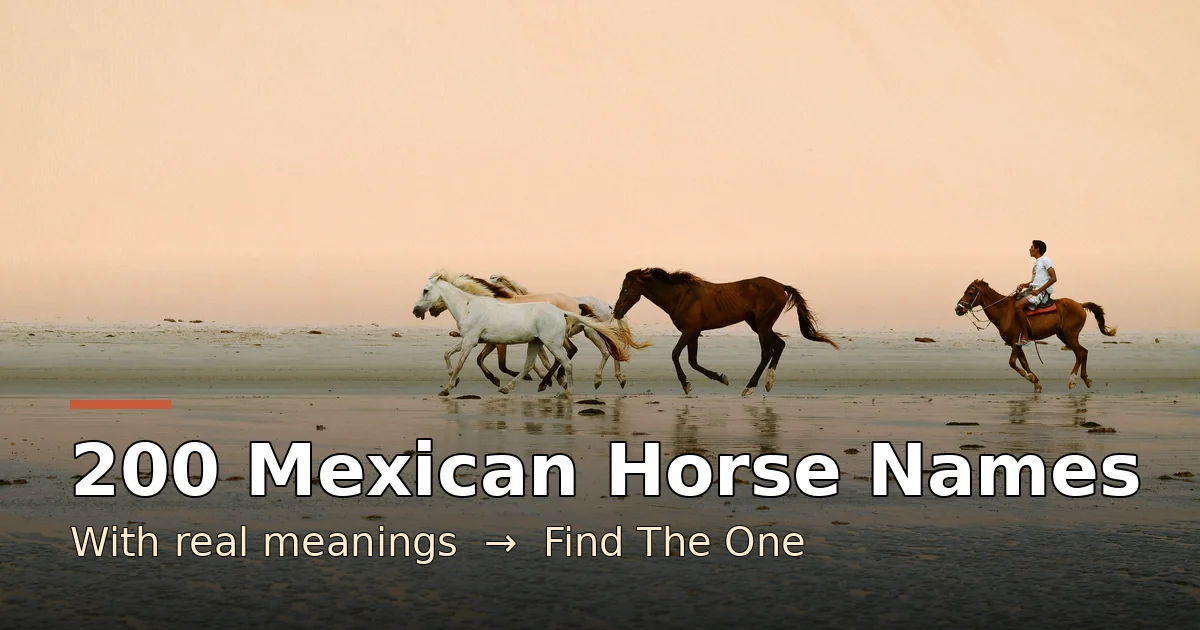
Mexican Horse Names: 200 Ideas With Real Meanings
Quick answer: The best mexican horse names come straight from Mexico’s soul — Azteca for pride, Paloma for gentleness, Zapata for courage, Fiesta for fun. Below: 200 mexican horse names for mares and stallions, each with its real Spanish, Aztec, or Mayan meaning, plus famous Mexican horses and a quick test for picking well.
Mexico and horses go back centuries. Spanish explorers brought horses to the Americas in the 1500s, giving the world the mustang, the vaquero tradition, and charrería — Mexico’s national rodeo sport. Mexico even has its own national horse breed, the Azteca, developed in 1972.
So a Mexican name on a horse is never random. Below are 200 mexican horse names grouped by flavor — fiesta, history, ranch, and desert.
15 Mexican Horse Names That Say “Mexico” in One Word
- Azteca – the Aztec; Mexico’s national horse breed.
- Fiesta – party. For the horse that loves a crowd.
- Bandido – bandit. The lovable outlaw.
- Vaquero – cowboy. The original, Mexican kind.
- Zapata – after Emiliano Zapata, hero of the revolution.
- Pancho – after Pancho Villa, the legendary general.
- Frida – after Frida Kahlo, Mexico’s fearless artist.
- Paloma – dove. Peaceful and gentle.
- Toro – bull. Power in four letters.
- Salsa – sauce — and the dance. Full of rhythm.
- Churro – the sweet fried pastry. For the sweet one.
- Tequila – Mexico’s famous spirit; fiery and bold.
- Sombrero – the wide hat. Big personality.
- Margarita – daisy. Classic and bright.
- Cielo – sky. Wide, calm, full of light.
- Cielito – little sky. From the beloved song “Cielito Lindo.”
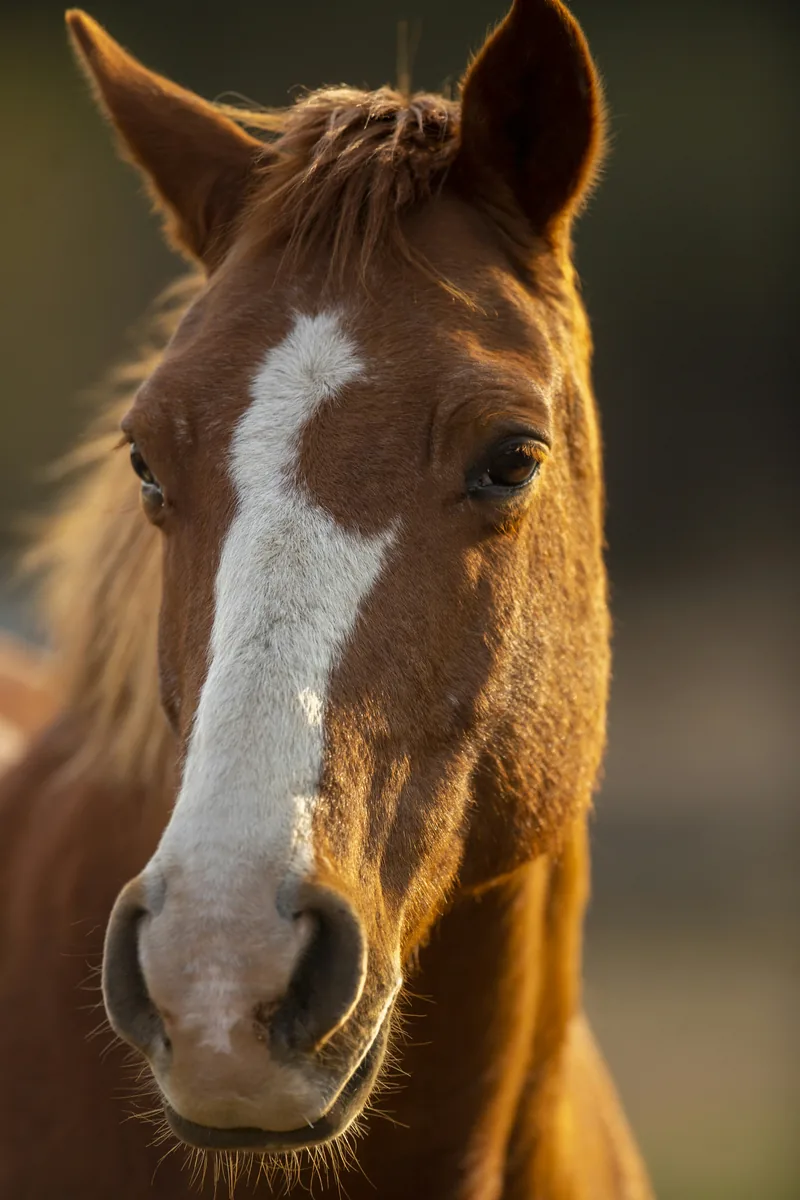
Mexican Horse Names for Mares
From revolution heroines to beloved singers — names with backbone and warmth.
- Adelita – the soldadera heroine of the revolution’s famous song.
- Frida – after Frida Kahlo; bold, brilliant, unforgettable.
- Selena – after Selena Quintanilla, the queen of Tejano music.
- Guadalupe – after Our Lady of Guadalupe, Mexico’s beloved patroness.
- Catrina – La Catrina, the elegant skeleton lady of Day of the Dead.
- Lupita – the fond diminutive of Guadalupe; warm and familiar.
- Marisol – sea and sun in one name. Bright and free.
- Esperanza – hope. The rescue mare’s name.
- Paloma – dove. The gentlest name here.
- Rosita – little rose. Sweet and classic.
- Carmelita – little Carmen; warm and musical.
- Juanita – little Juana; friendly and down-to-earth.
- Chiquita – little girl. For the petite mare.
- Señorita – young lady. Said with a smile.
- Reina – queen. Rules the pasture.
- Valentina – strong and healthy. Full of heart.
- Ximena – one who listens. Thoughtful and calm.
- Lucía – light. Brightens the whole barn.
- Mariana – graceful and beloved; a Mexican classic.
- Fernanda – bold voyager. The adventurer’s mare.
- Alejandra – defender. Strong and protective.
- Camila – noble and young. Elegant.
- Daniela – God is my judge. Steady and kind.
- Elena – shining light. Graceful and bright.
- Sofia – wisdom. For the clever, watchful mare.
- Isabel – devoted. Regal and timeless.
- Teresa – harvester. Earthy and kind.
- Consuelo – comfort. Calms every horse around her.
- Dolores – sorrows. A classic with deep roots.
- Luz – light. Short, bright, beautiful.
- Mariposa – butterfly. Delicate and graceful.
- Canela – cinnamon. Warm red-brown spice.
Mexican Horse Names for Stallions
Generals, artists, and vaqueros — names that ride tall.
- Pancho – after Pancho Villa, the revolution’s famous general.
- Zapata – after Emiliano Zapata; fearless and proud.
- Diego – after Diego Rivera, the great muralist. Strong and steady.
- Miguel – who is like God. A strong, traditional pick.
- Carlos – free man. Independent and proud.
- Javier – new house. Noble and grounded.
- Fernando – bold voyager. The adventurer’s horse.
- Alejandro – defender of men. Grand for a big gelding.
- Emilio – eager rival. Spirited and keen.
- Rafael – God has healed. The comeback horse’s name.
- Santiago – Saint James. Brave and storied.
- Mateo – gift of God. Warm and strong.
- Pablo – small. Big personality in a short name.
- Pedro – rock. Solid and dependable.
- Juan – God is gracious. Warm and classic.
- José – God will add. Steady and traditional.
- Luis – famous warrior. Brave and well-loved.
- Jorge – farmer. Earthy and grounded.
- Ricardo – strong ruler. Commands respect.
- Roberto – bright fame. Shines in the ring.
- Antonio – priceless. Worth more than gold.
- Manuel – God is with us. Steady and reliable.
- Francisco – free man. The full name behind Pancho.
- Hidalgo – nobleman. Dignified and honorable.
- Matador – bullfighter. Brave, precise, dramatic.
- Jefe – boss, chief. Everyone follows him.
- Capitán – captain. Leads the herd.
- Bandido – bandit. The charming outlaw.
- Bronco – wild, untamed horse. Pure spirit.
- Vaquero – cowboy. Ranch heritage in one word.
- Charro – the Mexican horseman of charrería.
- Diablo – devil. The lovable troublemaker.
Aztec & Mayan Names Older Than Mexico Itself
Long before Spanish arrived, the Aztec and Maya civilizations gave the world words of stunning beauty. Every meaning below is real — from Nahuatl, the Aztec language, and Mayan roots.
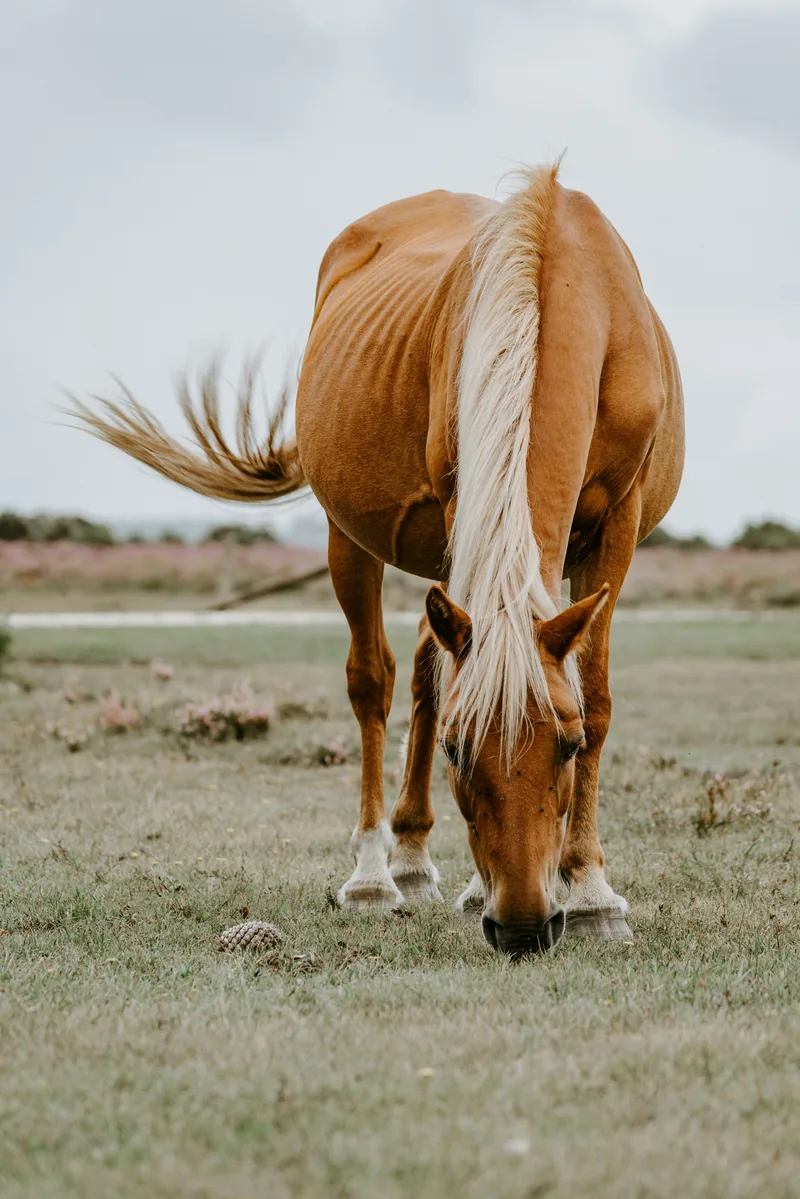
- Xóchitl – flower in Nahuatl. Simple and lovely.
- Citlali – star in Nahuatl. For the horse that shines.
- Itzel – rainbow lady in Mayan. Magical on a mare.
- Tonatiuh – sun in Nahuatl; the Aztec sun god.
- Quetzal – the precious green-feathered bird of the cloud forest.
- Cuauhtémoc – descending eagle; the last Aztec emperor’s name.
- Tlaloc – the Aztec god of rain. Powerful and ancient.
- Yaretzi – you will always be loved, in Nahuatl.
- Metzli – moon in Nahuatl. Calm and silver.
- Miztli – puma in Nahuatl. For the stealthy mover.
- Ocelotl – jaguar in Nahuatl. The jungle’s king.
- Coatl – serpent in Nahuatl. Sleek and striking.
- Ehecatl – wind in Nahuatl. Fast and free.
- Izel – unique in Nahuatl. One of a kind.
- Nelli – true, truly, in Nahuatl. Honest and steady.
- Tepin – small in Nahuatl. For the little horse with a big heart.
- Zolin – quail in Nahuatl. Quick and light.
- Xilonen – the Aztec goddess of young corn. Gentle and giving.
- Chalchi – from chalchihuitl, jade, the precious green stone.
- Atl – water in Nahuatl. For the horse that moves like a river.
- Tlalli – earth in Nahuatl. Grounded and strong.
- Mixtli – cloud in Nahuatl. Soft and drifting.
- Papalotl – butterfly in Nahuatl. Light on its feet.
- Tochtli – rabbit in Nahuatl. Quick and alert.
- Mazatl – deer in Nahuatl. Graceful and swift.
- Xolo – after the Xoloitzcuintli, Mexico’s ancient hairless dog.
Fiesta Names: Tacos, Tequila & Mariachi
Mexico knows how to celebrate. If you love the sound of Spanish, our spanish horse names guide has 200+ more.
- Taco – Mexico’s most famous food. Fun and unfussy.
- Churro – the sweet fried pastry. For the sweet-natured horse.
- Salsa – sauce, and the dance. Full of spice and rhythm.
- Tequila – the blue-agave spirit. Fiery and bold.
- Margarita – daisy. Bright, classic, cheerful.
- Mariachi – the festive street musicians. Loud and joyful.
- Fiesta – party. The horse that loves a crowd.
- Piñata – the decorated party figure. Colorful and fun.
- Sombrero – the wide-brimmed hat. Big personality.
- Cinco – five. A nod to Cinco de Mayo.
- Elote – corn on the cob, Mexican street style.
- Tamale – the steamed corn-husk classic. Warm and comforting.
- Mole – the rich, complex sauce. Deep and dark.
- Horchata – the sweet cinnamon rice drink. Smooth and sweet.
- Paleta – the Mexican popsicle. Bright and cheerful.
- Cajeta – goat’s-milk caramel. Sweet and golden.
- Jalapeño – the famous chili. Small with a kick.
- Chipotle – smoked chili. Smoky and bold.
- Mezcal – tequila’s smoky cousin. For the mysterious one.
- Poblano – the mild dark chili. Gentle with depth.
- Mango – the tropical fruit. Sweet and sunny.
- Coco – coconut. Fun and easygoing.
- Sandía – watermelon. Big, sweet, and summery.
- Limón – lime. Zesty and bright.
Map Names: Real Mexican Places
Mexico’s deserts, jungles, and coastlines make unforgettable names — each carries a real story.
- Sonora – the great desert state of the northwest.
- Durango – the rugged northern state of canyons.
- Oaxaca – the southern state of color and craft.
- Chiapas – the jungle state of waterfalls and Maya ruins.
- Jalisco – home of mariachi and tequila.
- Puebla – the colonial city of the Cinco de Mayo battle.
- Veracruz – the historic Gulf port.
- Yucatán – the peninsula of Maya temples.
- Baja – the long peninsula; wild and free.
- Tulum – the Maya clifftop city by the sea.
- Mazatlán – the Pacific resort city. Sunny and bright.
- Acapulco – the legendary beach city.
- Cancún – the Caribbean jewel. Bright and bold.
- Chihuahua – the vast northern state and desert.
- Cozumel – the island of swallows.
- Palenque – the jungle Maya ruins. Ancient and grand.
- Teotihuacan – the city of the gods, with its great pyramids.
- Sierra Madre – the mother mountain range.
- Río Bravo – Mexico’s name for the Rio Grande.
- Nayarit – the Pacific coastal state. Easygoing.
Vaquero Names: Ranch, Rodeo & Revolution
The vaquero invented the cowboy — rope, saddle horn, and all. These names carry that heritage. For more frontier spirit, see our mustang horse names guide.
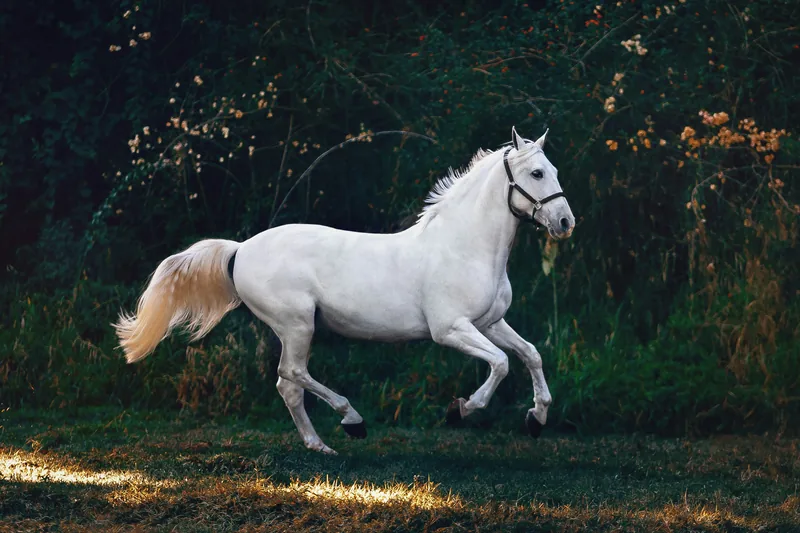
- Vaquero – cowboy. The original Mexican horseman.
- Charro – the charrería horseman in the silver-studded suit.
- Bandido – bandit. The charming outlaw.
- Toro – bull. Raw power.
- Bronco – wild, untamed horse. Pure spirit.
- Rodeo – the roundup turned sport.
- Lasso – the vaquero’s rope; pure ranch heritage.
- Espuela – spur. Quick and sharp.
- Jinete – rider, horseman. The partner’s name.
- Ranchero – rancher. Strong and hardworking.
- Zapata – Emiliano Zapata; fought for the land.
- Pancho – Pancho Villa; the revolution’s boldest general.
- Hidalgo – nobleman — and Miguel Hidalgo, father of independence.
- Siete Leguas – seven leagues; Pancho Villa’s famous mare.
- Adelita – the soldadera of the revolution’s song.
- Corazón – heart. The horse with the biggest one.
- Amigo – friend. The barn’s best companion.
- Loco – crazy. For the lovable wild one.
- Bravo – brave, fierce. Never backs down.
- Fuego – fire. The classic hot-blooded name.
- Relámpago – lightning bolt. Pure speed.
- Trueno – thunder. You hear it coming.
- Libertad – freedom. Born to run.
- Orgullo – pride. Head held high.
Coat-Color Names en Español
Naming for the coat is the oldest trick there is — and in Spanish it sounds like poetry. For spotted coats, see our paint horse names guide.
- Rojo – red. For the fiery sorrel.
- Blanca – white, feminine. For the snow-white mare.
- Negro – black. Sleek and strong.
- Dorado – golden. Made for a palomino.
- Ceniza – ash. Soft grey, quiet and calm.
- Canela – cinnamon. Warm red-brown spice.
- Café – coffee. Rich, dark brown.
- Miel – honey. Sweet golden brown.
- Nieve – snow. Pure white, inside and out.
- Sombra – shadow. Follows you everywhere.
- Oro – gold. Worth its weight.
- Plata – silver. The shimmering grey.
- Rosa – pink, rose. Soft and lovely.
- Azul – blue. For blue eyes or a blue roan.
- Verde – green. Unusual and fresh.
- Moreno – dark-haired. For the dark bay.
- Rubio – blond. For the flaxen mane.
- Pinto – painted. The spotted coat’s own name.
- Tordillo – the Spanish word for a grey horse.
- Alazán – the Spanish word for sorrel.
- Bayo – the Spanish word for bay.
- Azabache – jet black. The glossiest dark coat.
Famous Mexican Horses: The Real Ones
- Siete Leguas – “Seven Leagues,” the beloved mare of Pancho Villa, said to have carried him across the revolution.
- Tornado – the black stallion of Zorro, the masked hero of Spanish California legend and film.
- Diablo – the spirited horse of the Cisco Kid in the classic TV western.
- Azteca – not one horse but Mexico’s national breed itself, born in 1972 — naming yours Azteca honors the whole breed.
The 2-Minute “Say It in Spanish” Test
Before you commit, run your top three mexican horse names through this quick test:
1. Say it like a local. Roll the R in Bronco, soften the J in Jinete (hee-NEH-teh). Our horse names starting with F guide has the same warning for Fuego.
2. Check the meaning out loud. Tell a friend what it means — “this is Trueno, it means thunder.” If the meaning makes you smile, keep it — like Diego from our horse names starting with D list.
3. Shout it across the yard. Two syllables with a hard consonant carry best — Pancho, Toro, Churro pass easily. Longer beauties like Teotihuacan deserve a short barn name: call him Teo.
Mexican Horse Names: FAQs
What is a good Mexican name for a male horse?
Pancho, Zapata, Diego, Toro, and Bandido are proven favorites — strong, easy to shout, and each carries a real piece of Mexican culture.
What is a good Mexican name for a female horse?
Frida, Paloma, Adelita, Marisol, and Rosita top the list. For something ancient and rare, Xóchitl (flower) or Citlali (star) are beautiful Nahuatl choices.
What does Azteca mean?
Azteca means “Aztec” — of the Aztec people and empire of central Mexico. It is also the name of Mexico’s national horse breed, developed in 1972.
What is Mexico’s national horse breed?
The Azteca, developed in Mexico in 1972 from Andalusian, American Quarter Horse, and Mexican Criollo bloodlines. It was the first horse breed developed in Mexico and is famed for its agility in charrería.
What is the Mexican word for horse?
Caballo is the Spanish word for horse, used in Mexico. A mare is a yegua, a stallion is a semental, and a cowboy is a vaquero — the original cowboy.
What are some Aztec names for horses?
Xóchitl (flower), Citlali (star), Tonatiuh (sun), Quetzal (precious bird), Ocelotl (jaguar), and Yaretzi (you will always be loved) are real Nahuatl names that work beautifully on horses.
Do Mexican names work for non-Mexican breeds?
Absolutely — they suit any breed, since most mean universal things: sun, brave, free, sweet. Our italian horse names guide is the natural next read.
Your Mexican Horse Name Is Waiting
That is 200 mexican horse names — from Azteca to Zapata, from Xóchitl to Siete Leguas — each with its real meaning. Run your top three through the “say it in Spanish” test, and keep the one that sounds right shouted across the yard and whispered in the stable.
Still looking? Our spanish horse names guide covers the language in depth, and our mustang horse names guide follows the vaquero trail north.

About Liam
I’m Liam, and I write every single guide on Pet Names Lovers myself. Meet Liam →