
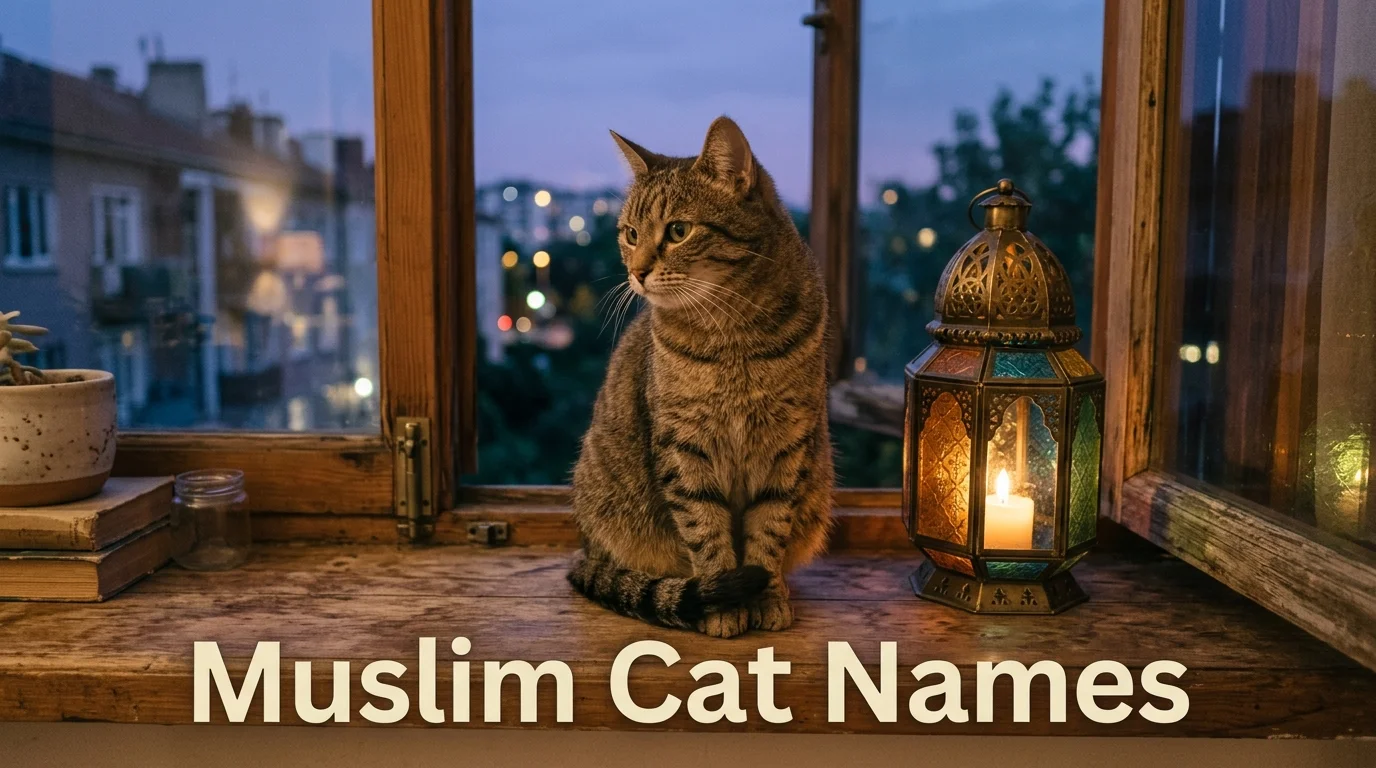
A cat holds a genuinely special place in Islamic tradition, which is why Muslim cat names tend to carry more weight than a random pretty-sounding word.
The most famous companion of the Prophet Muhammad, Abu Hurairah, earned his nickname “Father of the Kitten” for the cat he carried in his sleeve, and cats are considered ritually clean animals in Islamic teaching, unlike many other creatures.
Muslim Isn’t the Same as Arabic
Most pages on this topic just dump a list of Arabic words and call it a day, which misses something important. Islam is a global faith, so plenty of names used by Muslim families come from Turkish, Persian, Urdu, and Malay traditions rather than Arabic at all.
That distinction matters here. A name can be deeply Islamic without being Arabic, and this list pulls from all of those traditions rather than pretending they’re the same thing.
A Note on Names Worth Choosing Thoughtfully
Two categories of names are worth pausing on before you commit. The 99 Names of Allah (Ar-Rahman, Al-Karim, and so on) are traditionally used for people only with “Abd” attached in front, meaning “servant of,” so using one bare for a pet can read as disrespectful to many Muslims.
The same goes for the name Muhammad and the names of other prophets. Plenty of Muslim parents give these names to their sons without controversy, but a fair number of pet owners choose a name that honors the same virtue instead of using the exact sacred name for an animal.
Quick Reference: Naming Traditions Across the Muslim World
| Tradition | Example Names | What They Reflect |
|---|---|---|
| Arabic | Noor, Karim, Zahra | Direct Quranic or classical Arabic vocabulary |
| Persian | Yasmin, Soraya, Zeba | Poetic, nature, and beauty-based imagery |
| Turkish | Elif, Deniz, Aylin | Often short, nature-linked, or Ottoman-era names |
| Urdu/South Asian | Rida, Mehak, Iqbal | Blended Arabic-Persian roots with local sound |
Male Muslim Cat Names
Names for male cats here lean on Quranic figures, companions of the Prophet, and classic Arabic vocabulary, the same pool many Muslim families draw from for their sons.
- Muhammad – praised one
- Ahmad – most praiseworthy
- Ali – exalted, noble
- Omar – long-lived, flourishing
- Hasan – good, handsome
- Husain – diminutive of Hasan, “little handsome one”
- Zayd – growth, abundance
- Ibrahim – the Arabic form of Abraham
- Yusuf – the Arabic form of Joseph
- Salman – safe, healthy
- Hamza – lion
- Khalid – eternal
- Ayaan – gift of God
- Farhan – happiness
- Bilal – companion known as Islam’s first muezzin
- Rayan – a gate of Paradise mentioned in Islamic tradition
- Faisal – arbiter, judge
- Nabil – noble, generous
- Adnan – settler, old historical name
- Imran – a name tied to a chapter of the Quran
- Zahir – shining, radiant
- Sami – elevated, one who hears
- Tariq – morning star
- Saad – happiness, good fortune
- Usman – name of the third Caliph, known for generosity
- Abdullah – servant of God
- Dawood – the Arabic form of David
- Harun – the Arabic form of Aaron
- Ismail – the Arabic form of Ishmael
- Jafar – companion known for loyalty
- Malik – king
- Zain – beauty, ornament
- Adam – the first prophet’s name
- Haris – protector, guardian
- Kabir – great, supreme
- Amin – trustworthy, a title given to the Prophet
- Karim – generous, noble
- Rashid – rightly guided
- Naeem – blessing, comfort
- Yasin – a title associated with the Prophet in the Quran
- Idris – a prophet’s name, meaning debated
- Sulaiman – the Arabic form of Solomon
- Anas – companionship, affection
- Zubair – strong, firm
- Hakim – wise
- Rafi – exalted
- Farid – unique
- Wasim – handsome
- Fahd – leopard
- Aariz – respected, distinguished
- Hamid – one who praises
- Latif – gentle, kind
- Qasim – one who divides fairly
- Saleh – righteous, a prophet’s name
- Tahir – pure
- Waleed – newborn
- Yahya – the Arabic form of John
- Zaki – pure, intelligent
- Junaid – warrior, soldier
- Arif – knowledgeable, wise
Female Muslim Cat Names
These draw from the Prophet’s family, notable women in early Islamic history, and common Arabic and South Asian vocabulary.
- Aisha – living, alive
- Maryam – the Arabic form of Mary, the only woman named in the Quran
- Fatima – often translated as “the shining one,” the Prophet’s daughter
- Zainab – beauty, ornament
- Khadija – the Prophet’s first wife
- Aaliyah – to ascend, exalted
- Zahra – radiant, shining
- Yasmin – jasmine flower
- Amira – princess, leader
- Layla – night
- Hafsa – young lioness, a wife of the Prophet
- Safiya – pure, a wife of the Prophet
- Ruqayyah – daughter of the Prophet
- Sumaiyyah – the first martyr in Islamic history
- Salma – peaceful, safe
- Huda – guidance
- Iman – faith
- Amal – hope
- Noor – light
- Sana – radiance, brilliance
- Farah – joy
- Nadia – caller, one who calls out
- Zoya – life
- Inaya – care, concern
- Asma – elevated, name of a notable companion
- Hiba – gift
- Rania – queenly, gazing
- Jannah – paradise, garden
- Sara – wife of the Prophet Ibrahim
- Bushra – good news
- Karima – generous, noble
- Halima – patient, gentle
- Habiba – beloved
- Aleena – gentle, fair
- Faiza – successful, winning
- Ghania – rich, self-sufficient
- Maira – Persian-rooted name meaning “light of heaven” in some regions
- Naila – one who attains, achiever
- Uzma – greatest
- Wajiha – distinguished
- Rida – contentment
- Madiha – praiseworthy
- Kiran – ray of light
- Jawaria – companion name
- Iqra – “read,” the first word revealed in the Quran
- Aafia – health, well-being
- Sabira – patient
- Rukhsar – cheek, used poetically for beauty
- Anaya – care, protection
- Samira – companion in evening conversation
- Latifa – gentle, kind
- Naima – comfort, tranquility
- Widad – affection
- Farida – unique, precious pearl
- Rabia – spring
- Khalisa – pure, sincere
- Yumna – blessed, fortunate
- Areeba – wise, intelligent
- Warda – rose
- Mahnoor – light of the moon
Gender-Neutral Muslim Cat Names
Cats don’t need a grammatically matched name, and plenty of Islamic-world names work equally well either direction for a pet.
- Nur – light
- Rayyan – gate of Paradise
- Yusra – ease
- Kamal – perfection
- Amani – wishes, aspirations
- Suhail – a star name, also gentle
- Anwar – bright, luminous
- Hilal – crescent moon
- Shifa – healing
- Aziz – dear, powerful
- Aman – peace, safety
- Baraka – blessing
- Falak – sky, heavens
- Zafar – victory
- Anum – blessing, gift
- Sadiq – truthful, faithful
- Adil – just, fair
- Lubna – a fragrant tree
- Elham – inspiration
- Miraj – ascension
- Wisal – reunion, connection
- Aram – rest, comfort
- Naz – pride, grace
- Aafiyah – health, wellness
- Ehsan – kindness, excellence
- Yumn – good fortune
- Aqsa – farthest, distant
- Sabr – patience
- Amn – safety, peace
- Aleem – knowledgeable
Names That Mean Light and Radiance
Light shows up constantly in Islamic naming traditions, tied to guidance and clarity as much as brightness itself.
- Diya – light, radiance
- Ziya – light, splendor
- Shams – sun
- Qamar – moon
- Badr – full moon
- Munir – luminous
- Nayyir – shining, bright
- Ishraq – sunrise, illumination
- Wahaj – glow, brightness
- Zia – light (a common variant of Ziya)
- Noorani – radiant, light-filled
- Sitara – star
- Kawkab – star, planet
- Shihab – meteor, shooting star
- Thuraya – the Pleiades star cluster
- Najma – star
- Anjum – stars
- Roshan – bright, illuminated
- Misbah – lamp
- Anwariya – luminous
- Ashraq – radiance, brightness
- Lamah – glimmer, flash of light
- Zuhra – the planet Venus
- Farrukh – fortunate, luminous
- Tabish – glow, warmth of light
Names Inspired by Meaning in the Quran
Rather than the literal names of prophets, these words carry Quranic weight through virtue and imagery instead, a gentler way to bring that depth into a pet’s name.
- Kawthar – a river described in Paradise
- Firdaus – the highest level of Paradise
- Furqan – criterion, distinguishing truth from falsehood
- Ihsan – excellence, doing good
- Sabr – patience
- Shukr – gratitude
- Rahma – mercy, compassion
- Barakah – blessing
- Najah – success
- Fawz – triumph, victory
- Falah – prosperity, success
- Hidayah – guidance
- Yaqeen – certainty
- Tawfeeq – success granted by God
- Karamah – dignity, honor
- Adl – justice
- Amanah – trust
- Wafa – loyalty, faithfulness
- Ikhlas – sincerity
- Taqwa – God-consciousness
- Ridwan – divine pleasure
- Salaam – peace
- Husn – goodness, beauty
- Fadl – grace, favor
- Nimah – blessing
- Ghufran – forgiveness
- Tuba – a tree described in Paradise
- Zulfa – nearness
- Rafah – ease, comfort
- Uns – companionship, intimacy
Names Honoring Companions of the Prophet
Early Islamic history is full of companions whose names are still used today, cat-relevant history included.
- Siddiq – “the truthful,” title of the first Caliph
- Talha – companion promised Paradise
- Ammar – long-lived, endurance
- Muadh – companion known for scholarship
- Khubayb – companion known for steadfastness
- Miqdad – early companion
- Hurairah – “little kitten,” the nickname behind Abu Hurairah’s name
- Thabit – firm, steadfast
- Ubayy – companion and noted Quran reciter
- Suhayb – companion known as “the Roman”
- Juwayriyyah – a wife of the Prophet
- Maimuna – a wife of the Prophet, “blessed”
- Asiya – righteous woman named in the Quran
- Khawla – companion known for standing up for her rights
- Nusaybah – companion known for her courage in battle
- Ramlah – companion, also known as Umm Habibah
- Sawdah – a wife of the Prophet
- Kulthum – daughter of the Prophet
- Zubaidah – historical figure known for charitable water projects
- Nafisa – noted early Islamic scholar
- Aatikah – companion name
- Fakhita – companion name
- Durrah – “pearl,” companion name
- Hind – historical companion name
- Bilqis – the Queen of Sheba, named in the Quran
Names That Mean Beauty and Grace
- Jamil – handsome
- Jamila – beautiful
- Husna – most beautiful
- Bahiya – radiant, beautiful
- Malika – queen
- Zarina – golden
- Dilnaz – heart-charming
- Pari – fairy-like
- Gulnar – pomegranate flower
- Gulzar – rose garden
- Zeba – beautiful
- Naznin – delicate, graceful
- Dilara – heart’s beloved
- Sanam – beloved
- Alina – delicate, noble
- Rukhsana – bright-faced
- Farzana – wise, intelligent
- Shireen – sweet
- Roya – dream, vision
- Mahjabeen – moon-faced
- Noorjahan – light of the world
- Chandni – moonlight
- Zebunissa – ornament among women
- Gulrukh – rose-faced
- Adiba – cultured, refined
- Rafiah – high-ranking, elegant
- Husniya – beautiful, graceful
- Bazigha – bright, radiant
- Naghma – melody
- Aroosa – bride-like, lovely
Names That Mean Strength and Courage
- Asad – lion
- Ghalib – victorious
- Nasir – helper, defender
- Ghazi – warrior
- Fateh – conqueror, victor
- Shuja – brave
- Babar – lion
- Sher – lion
- Haidar – lion, a title of Ali
- Dilawar – brave-hearted
- Jaleel – great, mighty
- Qawi – strong
- Mansur – victorious, divinely aided
- Ghayoor – protective, zealous
- Rustam – legendary hero of Persian tradition
- Sikandar – the Persian and South Asian form of Alexander
- Fauzan – victorious
- Himmat – courage
- Jasoor – bold, daring
- Dalir – brave
- Zabir – strong, supporter
- Batal – hero
- Faris – knight, horseman
- Zarrar – striker, named for a companion’s sword
- Shamsheer – sword
Turkish, Persian, and Urdu Muslim Names
- Aylin – halo around the moon
- Deniz – sea
- Ece – queen
- Elif – graceful, first letter of the Arabic alphabet
- Yigit – brave young man
- Emre – friend, brother
- Ozan – bard, poet
- Baris – peace
- Kaan – ruler
- Mert – brave, honest
- Soraya – the Pleiades star cluster
- Roxana – star-like, bright
- Farhad – legendary lover in Persian literature
- Aiman – blessed, fortunate
- Rimsha – modern South Asian name
- Areej – fragrance
- Mehak – fragrance
- Sehar – dawn
- Eshal – modern popular Urdu name
- Alishba – modern variant naming tradition
- Anmol – priceless
- Abeer – fragrance
- Momina – believing woman
- Siti – honorific used across Indonesian and Malay Muslim names
- Aisyah – Indonesian spelling of Aisha
- Iqbal – prosperity, good fortune
- Rizky – sustenance, blessing
- Putri – princess, common Indonesian and Malay name
- Zulfiqar – name of a famous sword owned by Ali
- Gulbahar – spring rose
- Pervez – victorious
- Parveen – the Pleiades star cluster
- Nasreen – wild rose
- Yasameen – Persian spelling of Yasmin
- Farooq – “the one who distinguishes,” title of the second Caliph
Short and Simple Everyday Names
Short names are the ones you’ll actually use, over and over, calling a cat in from the yard or across the house.
- Deen – faith, way of life
- Faiz – victorious, gracious
- Rafay – exalted
- Latif – gentle, kind
- Nadir – rare, precious
- Hadi – guide
- Wali – guardian, protector
- Zahid – ascetic, devoted
- Iyad – strength, support
- Jad – generous
- Fadi – one who sacrifices for another
- Rami – archer
- Sarim – sharp, resolute
- Talib – seeker, especially of knowledge
- Wajid – one who finds
- Nael – one who attains
- Rafid – supporter
- Hani – happy, joyful
- Adham – dark, handsome
- Aws – companion name
- Basil – brave
- Ward – rose
- Sabri – patient
- Rayhan – fragrant plant mentioned in the Quran
- Emad – support, pillar
- Zahin – intelligent
- Nabeeh – distinguished
- Thamer – fruitful
- Shadi – joyful, happy
- Nawaz – grace, favor
How to Choose a Muslim Cat Name
Start with what actually matters to you: the name’s meaning, the region it comes from, or simply how it sounds said out loud a dozen times a day. A name tied to a companion of the Prophet carries different weight than a name that just means “light,” and both are completely valid starting points.
If you’d rather build from color or personality first, our cat names guide covers that broader ground, and our royal cat names list overlaps nicely with names here that mean “king” or “queen.”
Common Mistakes to Avoid
Don’t mix up “Arabic” and “Muslim” as if they’re interchangeable. Plenty of Muslims are Turkish, Persian, Indonesian, or South Asian and don’t speak Arabic day to day, so a name search limited to Arabic vocabulary misses a huge share of real Muslim naming traditions.
Don’t use a bare Name of Allah (Rahman, Karim used alone as a divine reference, and so on) without checking whether it needs the traditional “Abd” prefix to be used respectfully. Islamic naming guidance also generally discourages names with harsh or negative meanings, war or bitterness among them, so it’s worth checking a name’s meaning before falling in love with how it sounds.
Don’t guess at a translation you’re not sure of. A name that “sounds Arabic” isn’t the same as a name that’s actually used and understood that way, and getting it wrong is the kind of mistake a Muslim reader will notice immediately.
Picking the Name That Actually Fits
None of this needs to be overwhelming. Pick the tradition, whether Arabic, Persian, Turkish, or Urdu, that feels most like home, then let the meaning do the rest of the work.
If your cat’s coloring or personality gives you a stronger starting point than religion alone, our uncommon cat names and magical cat names guides are worth a look too.
Frequently Asked Questions
Zain, Rayan, Karim, Bilal, Hadi, Faiz, and Sami all work well: short enough to call out, and each carries a genuinely positive meaning.
The everyday Arabic word for cat is “qittah” (قطة) for a female cat and “qitt” (قط) for a male. The older classical term “hirrah” is where the companion Abu Hurairah’s nickname comes from.
Yes. Islamic naming traditions include Turkish, Persian, Urdu, Indonesian, and Malay names alongside Arabic ones, since Islam itself spans far more cultures than the Arab world.
Yes. Cats are considered ritually pure (tahir) in Islamic teaching, a status tied directly to the story of Abu Hurairah and his well-documented fondness for them.